
Finger exercises to build strength, coordination, and clean fretting from the first session.
Dorian Foundations
Build a minor-centered fretboard around Dorian's natural sixth, connect the defining i-IV dominant movement across all seven positions, and create minor grooves without collapsing the sound into Aeolian.
Each stage centers one musical target. Its activities stay grouped together so the course reads as a path through the fretboard, not a list of disconnected drills.
- For Intermediate Players
- Interactive Course
- Pentatonic or Blues Recommended
- Stages
- 7
- Lessons
- 41
- Targets
- 385
Stage breakdown
Dorian stays visible as the parent map while each stage shifts the harmonic target and adds the positions needed for that sound.
Establish Position 1 and i minor 7 as the tonal anchor before introducing the natural-six harmony.
5Tracks5Lessons15Targets
Center the Dorian map on i while connecting ascending and descending sequences across Position 1.
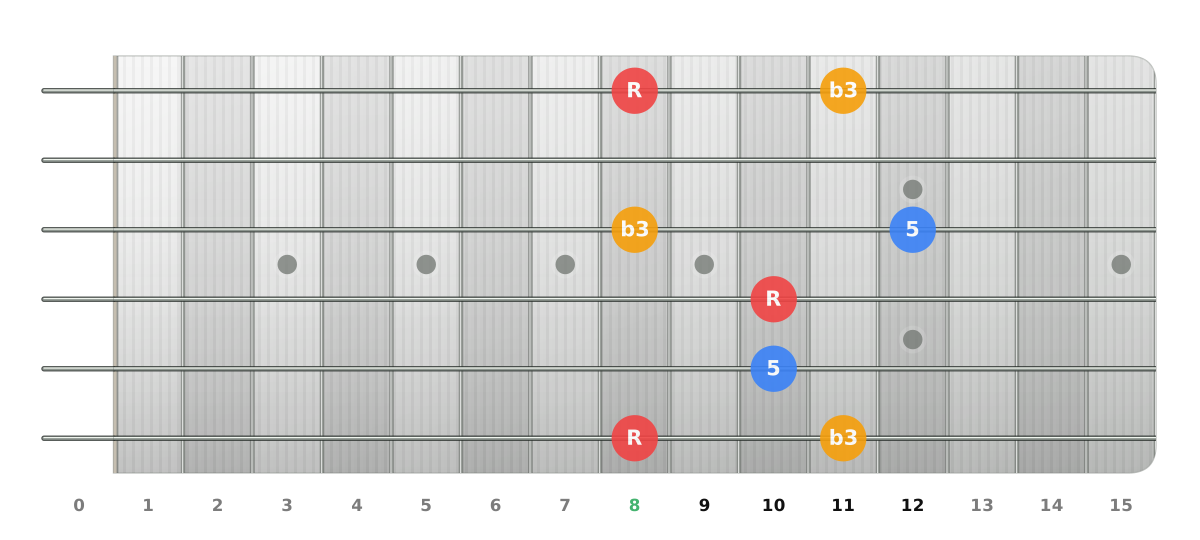
Isolate the i triad tones while preserving the same focus-first position order.
Build the native i Minor 7 sound inside the newly introduced Position 1.
Combine the first Dorian scale, arpeggio, and chord shapes over a four-bar i vamp.
Add Position 3 and IV dominant 7, making Dorian's natural sixth audible through its defining major-four chord.
6Tracks6Lessons30Targets
Finger exercises to build strength, coordination, and clean fretting from the first session.
Center the Dorian map on IV while connecting ascending and descending sequences across Positions 1 + 3.
Isolate the IV triad tones while preserving the same focus-first position order.
Build the native IV Dominant 7 sound inside the newly introduced Position 3.
Use the new IV sound in short modal movements built only from functions introduced through this stage.
Move between IV in Position 3 and i in Position 1 while keeping the Dorian parent map intact.
Add Position 5 and VII major 7, connecting the minor tonic to Dorian's broad modal backdoor color.
6Tracks6Lessons44Targets
Finger exercises to build strength, coordination, and clean fretting from the first session.
Center the Dorian map on VII while connecting ascending and descending sequences across Positions 1 + 3 + 5.
Isolate the VII triad tones while preserving the same focus-first position order.
Build the native VII Major 7 sound inside the newly introduced Position 5.
Use the new VII sound in short modal movements built only from functions introduced through this stage.
Move between VII in Position 5 and i in Position 1 while keeping the Dorian parent map intact.
Add Position 2 and v minor 7, retaining the modal minor dominant instead of introducing a raised leading tone.
6Tracks6Lessons56Targets
Finger exercises to build strength, coordination, and clean fretting from the first session.
Center the Dorian map on v while connecting ascending and descending sequences across Positions 1 + 2 + 3 + 5.
Isolate the v triad tones while preserving the same focus-first position order.
Build the native v Minor 7 sound inside the newly introduced Position 2.
Use the new v sound in short modal movements built only from functions introduced through this stage.
Move between v in Position 2 and i in Position 1 while keeping the Dorian parent map intact.
Add Position 4 and ii minor 7, opening smoother minor motion around the i-IV modal center.
6Tracks6Lessons68Targets
Finger exercises to build strength, coordination, and clean fretting from the first session.
Center the Dorian map on ii while connecting ascending and descending sequences across Positions 1 + 2 + 3 + 4 + 5.
Isolate the ii triad tones while preserving the same focus-first position order.
Build the native ii Minor 7 sound inside the newly introduced Position 4.
Use the new ii sound in short modal movements built only from functions introduced through this stage.
Move between ii in Position 4 and i in Position 1 while keeping the Dorian parent map intact.
Add Position 7 and III major 7 as Dorian's relative-major color without surrendering the minor tonic.
6Tracks6Lessons80Targets
Finger exercises to build strength, coordination, and clean fretting from the first session.
Center the Dorian map on III while connecting ascending and descending sequences across Positions 1 + 2 + 3 + 4 + 5 + 7.
Isolate the III triad tones while preserving the same focus-first position order.
Build the native III Major 7 sound inside the newly introduced Position 7.
Use the new III sound in short modal movements built only from functions introduced through this stage.
Move between III in Position 7 and i in Position 1 while keeping the Dorian parent map intact.
Add Position 6 and vi half-diminished, completing the seven-position Dorian map around its characteristic natural sixth.
6Tracks6Lessons92Targets
Finger exercises to build strength, coordination, and clean fretting from the first session.
Center the Dorian map on vi° while connecting ascending and descending sequences across all seven positions.
Isolate the vi° triad tones while preserving the same focus-first position order.
Build the native viø m7b5 sound inside the newly introduced Position 6.
Use the new viø sound in short modal movements built only from functions introduced through this stage.
Move between viø in Position 6 and i in Position 1 while keeping the Dorian parent map intact.