
Finger exercises to build strength, coordination, and clean fretting from the first session.
Harmonic Minor Foundations
Build harmonic minor as one tonic-centered seven-position map, then connect its leading-tone cadence to i through V7, iiø7, vii°7, and the characteristic augmented-major sound.
Each stage centers one musical target. Its activities stay grouped together so the course reads as a path through the fretboard, not a list of disconnected drills.
- For Intermediate Players
- Interactive Course
- Pentatonic or Blues Recommended
- Stages
- 7
- Lessons
- 41
- Targets
- 378
Stage breakdown
Harmonic Minor stays visible as the parent map while each stage shifts the harmonic target and adds the positions needed for that sound.
Establish Position 1, hear the raised seventh against tonic minor, and keep a stable i triad underneath the first solo practice.
5Tracks5Lessons15Targets
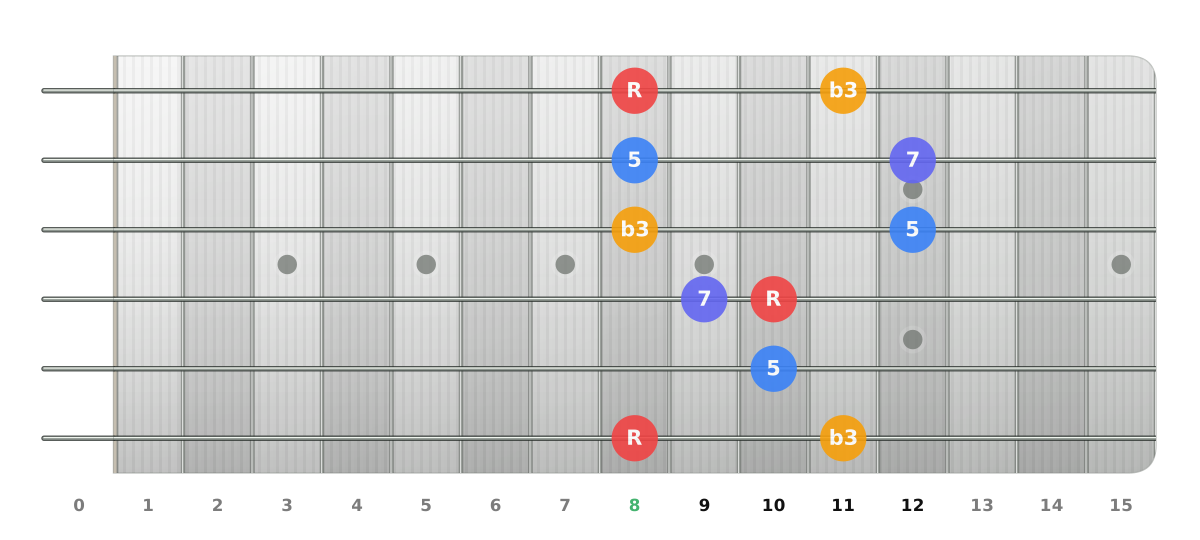
Center the Harmonic Minor map on i(mMaj7) while connecting ascending and descending sequences across Position 1.
Isolate the stage chord tones across the cumulative parent-map positions.
Connect the new position to its characteristic seventh-chord sound.
Turn the first scale, arpeggio, and tonic-chord shapes into four-bar phrases.
Add Position 3 and V7, turning the raised seventh into a direct dominant pull back to tonic minor.
6Tracks6Lessons30Targets
Finger exercises to build strength, coordination, and clean fretting from the first session.
Center the Harmonic Minor map on V7 while connecting ascending and descending sequences across Positions 1 + 3.
Isolate the stage chord tones across the cumulative parent-map positions.
Connect the new position to its characteristic seventh-chord sound.
Practice short cadences that preserve each chord's authored minor-scale source.
Solo over the stage harmony while preserving the course's tonic-centered parent map.
Add Position 5 and iv7, then connect the minor subdominant to V7 and the tonic cadence.
6Tracks6Lessons43Targets
Finger exercises to build strength, coordination, and clean fretting from the first session.
Center the Harmonic Minor map on iv7 while connecting ascending and descending sequences across Positions 1 + 3 + 5.
Isolate the stage chord tones across the cumulative parent-map positions.
Connect the new position to its characteristic seventh-chord sound.
Practice short cadences that preserve each chord's authored minor-scale source.
Solo over the stage harmony while preserving the course's tonic-centered parent map.
Add Position 2 and iiø7, completing the essential minor-key iiø7–V7–i cadence.
6Tracks6Lessons54Targets
Finger exercises to build strength, coordination, and clean fretting from the first session.
Center the Harmonic Minor map on iiø7 while connecting ascending and descending sequences across Positions 1 + 2 + 3 + 5.
Isolate the stage chord tones across the cumulative parent-map positions.
Connect the new position to its characteristic seventh-chord sound.
Practice short cadences that preserve each chord's authored minor-scale source.
Solo over the stage harmony while preserving the course's tonic-centered parent map.
Add Position 4 and VImaj7, then place the flat-six color ahead of iiø7–V7–i turnarounds.
6Tracks6Lessons66Targets
Finger exercises to build strength, coordination, and clean fretting from the first session.
Center the Harmonic Minor map on VImaj7 while connecting ascending and descending sequences across Positions 1 + 2 + 3 + 4 + 5.
Isolate the stage chord tones across the cumulative parent-map positions.
Connect the new position to its characteristic seventh-chord sound.
Practice short cadences that preserve each chord's authored minor-scale source.
Solo over the stage harmony while preserving the course's tonic-centered parent map.
Add Position 7 and vii°7, using the leading-tone diminished chord as a compact substitute for dominant tension.
6Tracks6Lessons79Targets
Finger exercises to build strength, coordination, and clean fretting from the first session.
Center the Harmonic Minor map on vii°7 while connecting ascending and descending sequences across Positions 1 + 2 + 3 + 4 + 5 + 7.
Isolate the stage chord tones across the cumulative parent-map positions.
Connect the new position to its characteristic seventh-chord sound.
Practice short cadences that preserve each chord's authored minor-scale source.
Solo over the stage harmony while preserving the course's tonic-centered parent map.
Add Position 6 and III+maj7, completing all seven positions with harmonic minor's distinctive augmented-major color.
6Tracks6Lessons91Targets
Finger exercises to build strength, coordination, and clean fretting from the first session.
Center the Harmonic Minor map on III+maj7 while connecting ascending and descending sequences across all seven positions.
Isolate the stage chord tones across the cumulative parent-map positions.
Connect the new position to its characteristic seventh-chord sound.
Practice short cadences that preserve each chord's authored minor-scale source.
Solo over the stage harmony while preserving the course's tonic-centered parent map.