
Finger exercises to build strength, coordination, and clean fretting from the first session.
Symmetric Dominant Foundations
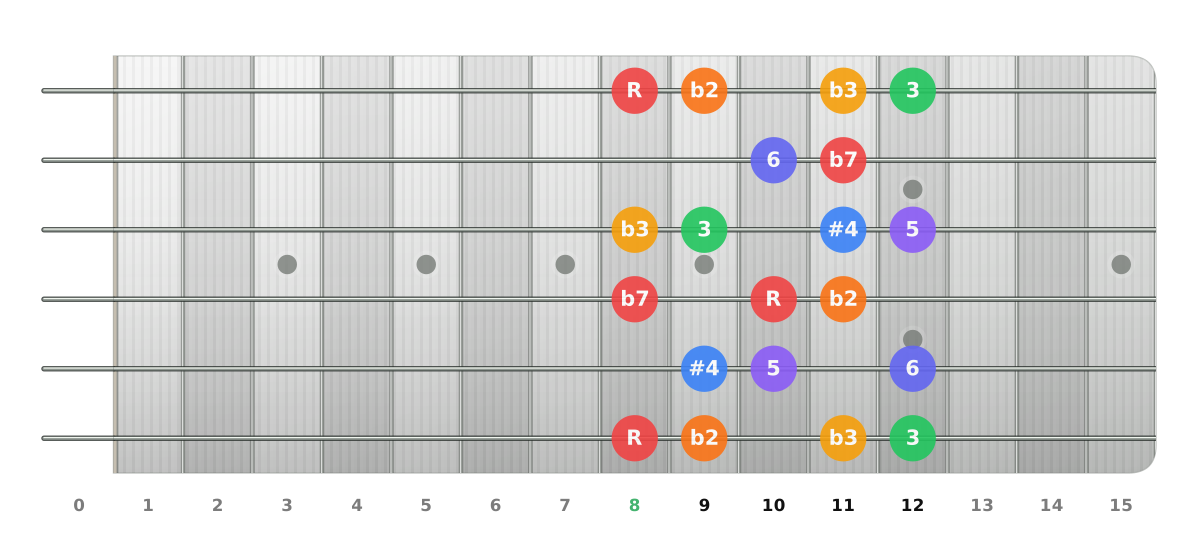
Learn Half–Whole Diminished through five authored symmetric positions, then apply its flat-nine, diminished, and thirteen colors to dominant resolution.
Each stage centers one musical target. Its activities stay grouped together so the course reads as a path through the fretboard, not a list of disconnected drills.
- For Advanced Players
- Interactive Course
- Diatonic Foundations Recommended
- Stages
- 5
- Lessons
- 30
- Targets
- 189
Stage breakdown
Half–Whole Diminished stays visible as the parent map while each stage shifts the harmonic target and adds the positions needed for that sound.
Establish Position 1 over V7♭9 and resolve its tension into the destination tonic.
6Tracks6Lessons16Targets
Hear the repeating half-step and whole-step tension while keeping the dominant root fixed.
Isolate the application chord tones without changing the course's fixed lead map.
Practice the tension chord and its destination together.
Connect the scale color to a short, playable harmonic resolution.
Turn the scale, arpeggio, and chord work into short phrases over a groove.
Add Position 3 and connect the flat-nine diminished seventh structure to V7♭9.
6Tracks6Lessons26Targets
Finger exercises to build strength, coordination, and clean fretting from the first session.
Hear the repeating half-step and whole-step tension while keeping the dominant root fixed.
Isolate the application chord tones without changing the course's fixed lead map.
Connect the new position to its practical harmony.
Connect the scale color to a short, playable harmonic resolution.
Turn the scale, arpeggio, and chord work into short phrases over a groove.
Add Position 5 for the natural-thirteen color, then return to the established Position 1 rootless V13♭9 voicing.
6Tracks6Lessons38Targets
Finger exercises to build strength, coordination, and clean fretting from the first session.
Hear the repeating half-step and whole-step tension while keeping the dominant root fixed.
Isolate the application chord tones without changing the course's fixed lead map.
Connect the new position to its practical harmony.
Connect the scale color to a short, playable harmonic resolution.
Turn the scale, arpeggio, and chord work into short phrases over a groove.
Add Position 2, review the ♭II°7 upper structure over V, and place it inside a complete ii7–V7♭9–Imaj7 cadence.
6Tracks6Lessons49Targets
Finger exercises to build strength, coordination, and clean fretting from the first session.
Hear the repeating half-step and whole-step tension while keeping the dominant root fixed.
Isolate the application chord tones without changing the course's fixed lead map.
Connect the new position to its practical harmony.
Connect the scale color to a short, playable harmonic resolution.
Turn the scale, arpeggio, and chord work into short phrases over a groove.
Add Position 4, review the I°7 structure over V, and complete all five positions with I–vi–ii–V7♭9 motion.
6Tracks6Lessons60Targets
Finger exercises to build strength, coordination, and clean fretting from the first session.
Hear the repeating half-step and whole-step tension while keeping the dominant root fixed.
Isolate the application chord tones without changing the course's fixed lead map.
Connect the new position to its practical harmony.
Connect the scale color to a short, playable harmonic resolution.
Turn the scale, arpeggio, and chord work into short phrases over a groove.