ScaleModePro

Types of Guitar Practice: Choose What to Work On

Guitar practice can mean working on your hands, learning a scale, changing chords, or making a solo over a groove. Each kind of practice gives you a different way to build your musicianship—and they become more useful when you connect them.

Explore the activities that make up a ScaleModePro course and see how each one supports your playing. Then choose a scale and bring those activities together in a path you can explore at your own pace.

Why guitar practice variety matters

A clean run through a scale and a compelling solo are related, but they ask different things of you. Finger exercises give your hands movements to work on. Scale practice shows you where notes are. Chords and progressions let you hear how those notes fit into harmony. Each activity answers a different practice question.

You do not have to work on everything at once. If your fingers are getting tangled, spend some time on mechanics. If you know a shape but are unsure what to play with it, try connecting it to chords or using it in a jam. Pick the activity that meets you where you are, then bring the pieces together.

Types of guitar practice

A course gives you more than a scale shape to memorize. Mechanics prepares your hands; scales and chords map out the notes and harmony; progressions connect chords into movement; and jams give you a place to apply those ideas. Some courses also include arpeggios. These previews show examples of the activities you can explore.

The benefit guides compare each activity’s main focus. They are starting points, not measurements of progress: how you practice matters, and the activities support one another.

Mechanics

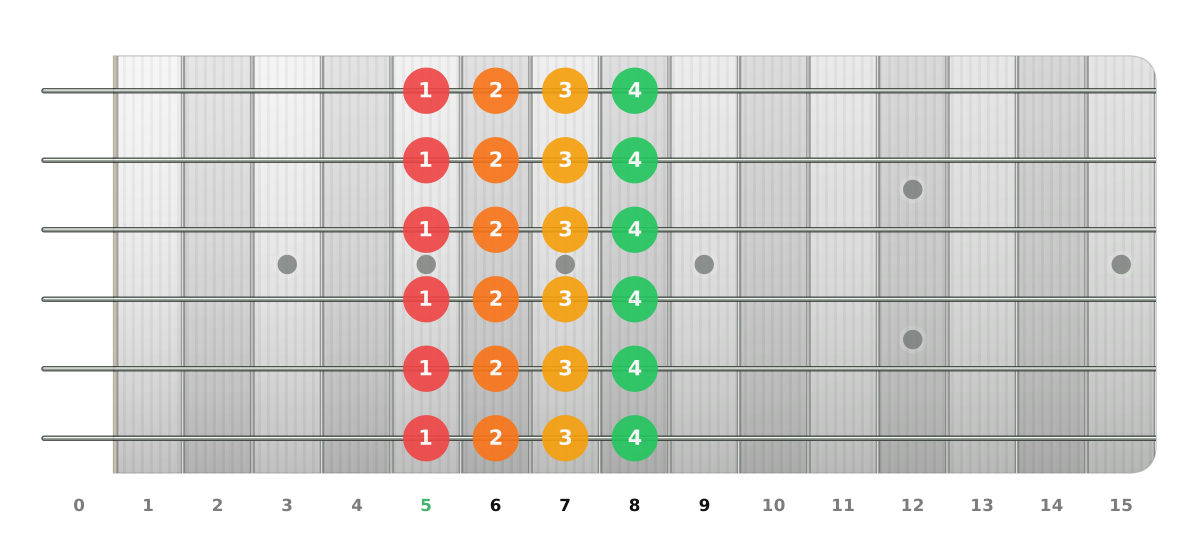
In the preview: Ascending and descending finger control across frets 5–9.

What it helps you practice

  • Finger accuracy5 out of 5: Core focus
  • Picking control5 out of 5: Core focus
  • Controlled speed4 out of 5: Strong focus
  • Fretboard knowledge2 out of 5: Occasional benefit
  • Songwriting & harmony1 out of 5: Less direct

Clean notes and coordinated hands start with deliberate movement. Repeat focused finger patterns while paying attention to fretting and picking control, then explore speed without rushing the motion.

In a course

In Major Ionian Foundations, each stage starts with a mechanics warm-up matched to the hand position and movements used in that stage's musical practice.

Explore Major Ionian Foundations
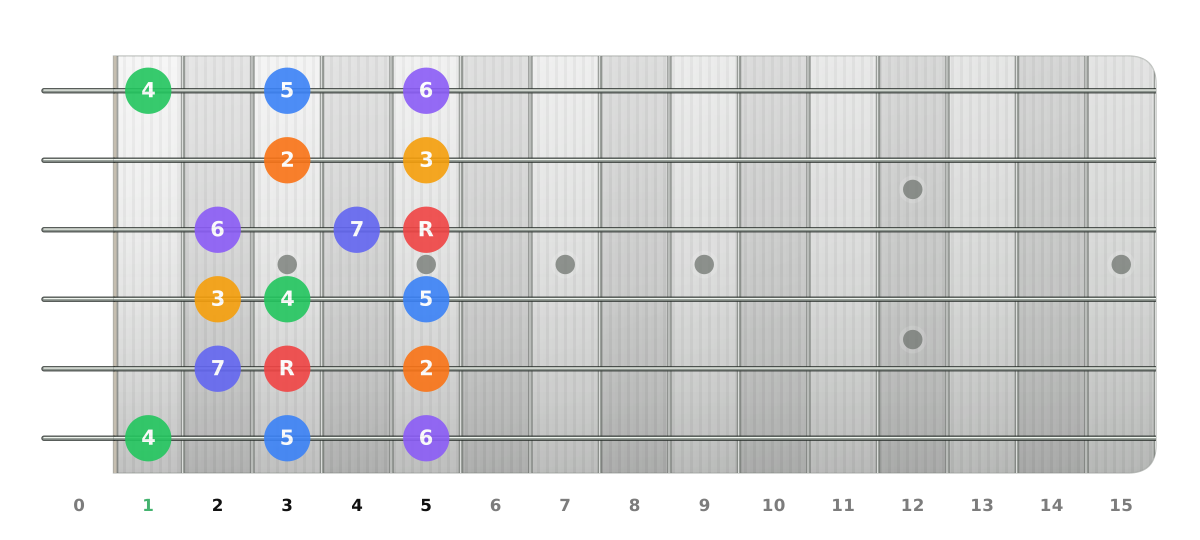
Scales

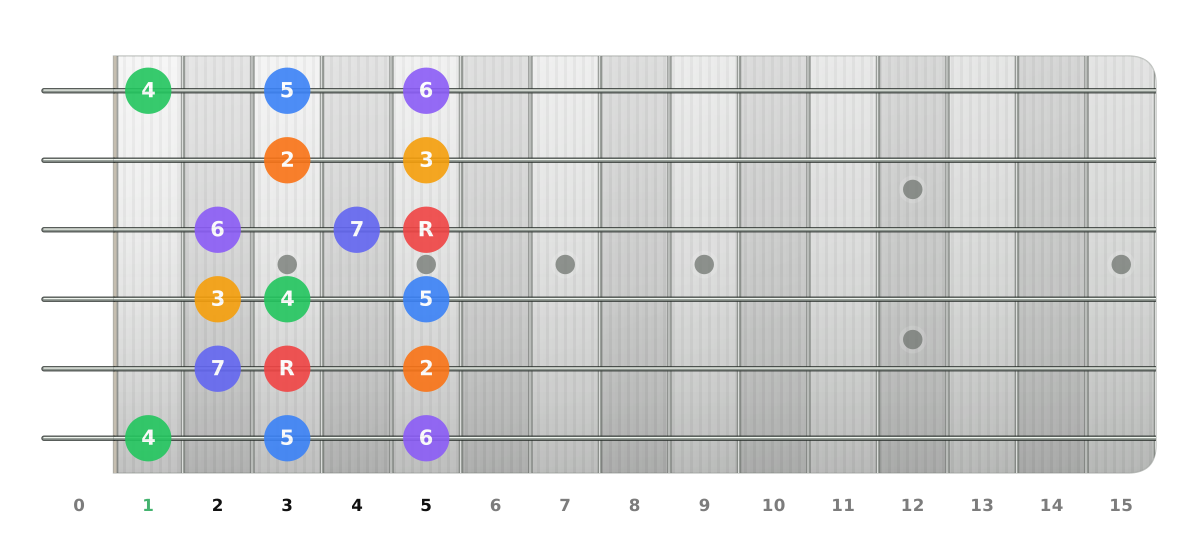
In the preview: Ionian Position 5, practiced in groups of four.

What it helps you practice

  • Finger accuracy4 out of 5: Strong focus
  • Picking control4 out of 5: Strong focus
  • Controlled speed4 out of 5: Strong focus
  • Fretboard knowledge5 out of 5: Core focus
  • Songwriting & harmony3 out of 5: Useful support

A scale gives you a map of notes to draw on for melodies, fills, and solos. Practice its patterns in different positions and work on connecting them across the neck.

In a course

Major Ionian Foundations starts with the I shape in Position 1, then introduces the relative minor sound across Positions 1 and 3.

Explore Major Ionian Foundations

Arpeggios

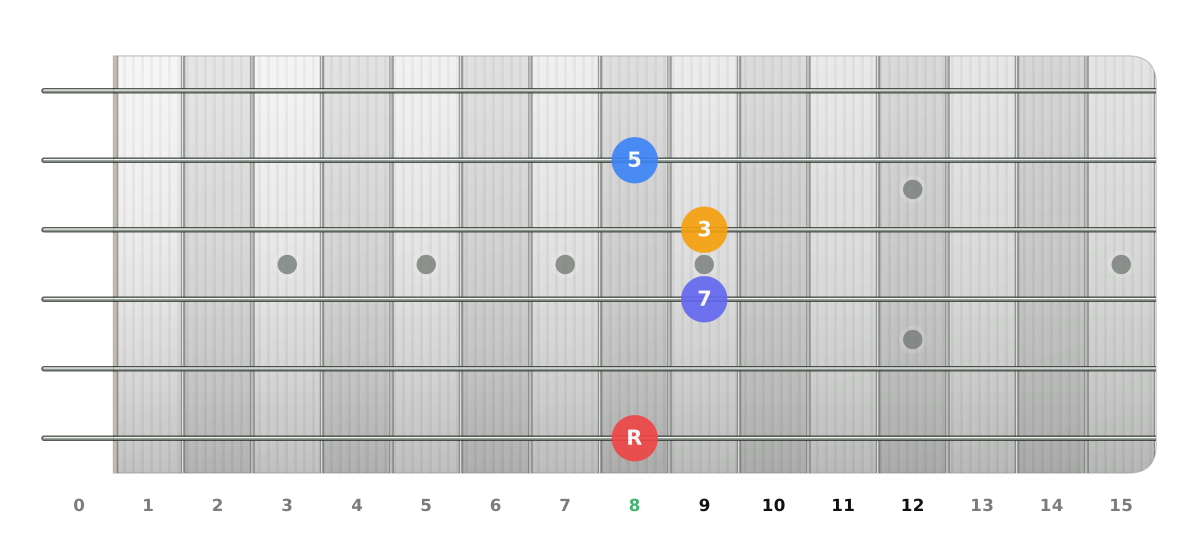
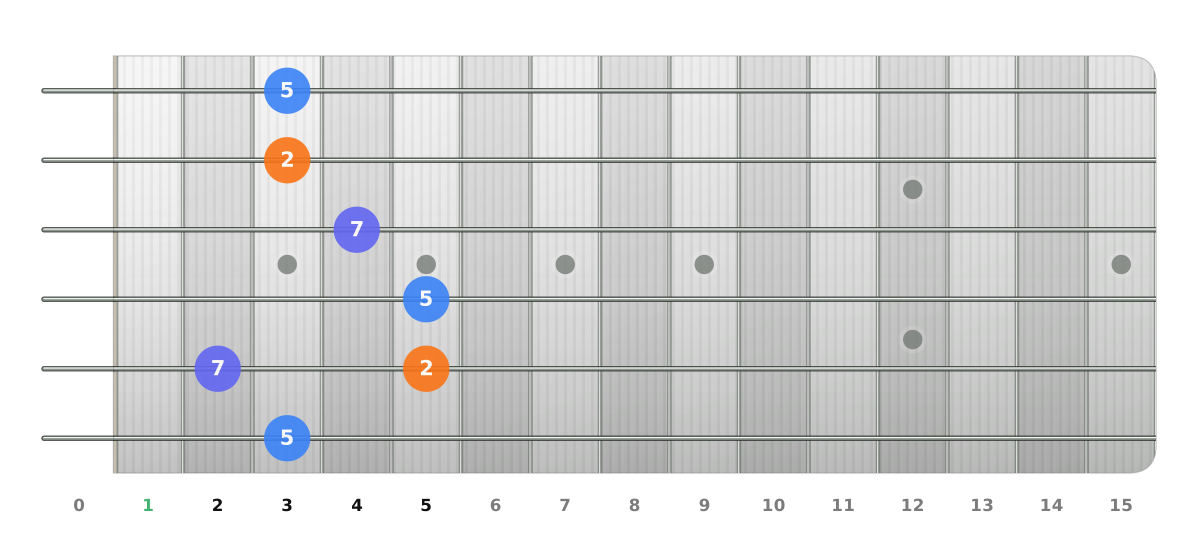
In the preview: V triad in Position 5, using chord-tone skips.

What it helps you practice

  • Finger accuracy4 out of 5: Strong focus
  • Picking control4 out of 5: Strong focus
  • Controlled speed4 out of 5: Strong focus
  • Fretboard knowledge5 out of 5: Core focus
  • Songwriting & harmony5 out of 5: Core focus

Arpeggios help you hear how individual notes relate to a chord. Play the chord's notes one at a time and practice finding those tones in different fretboard positions.

In a course

In Major Ionian Foundations, you practice the I triad in Position 1 before exploring the vi triad in Positions 1 and 3.

Explore Major Ionian Foundations

Chords

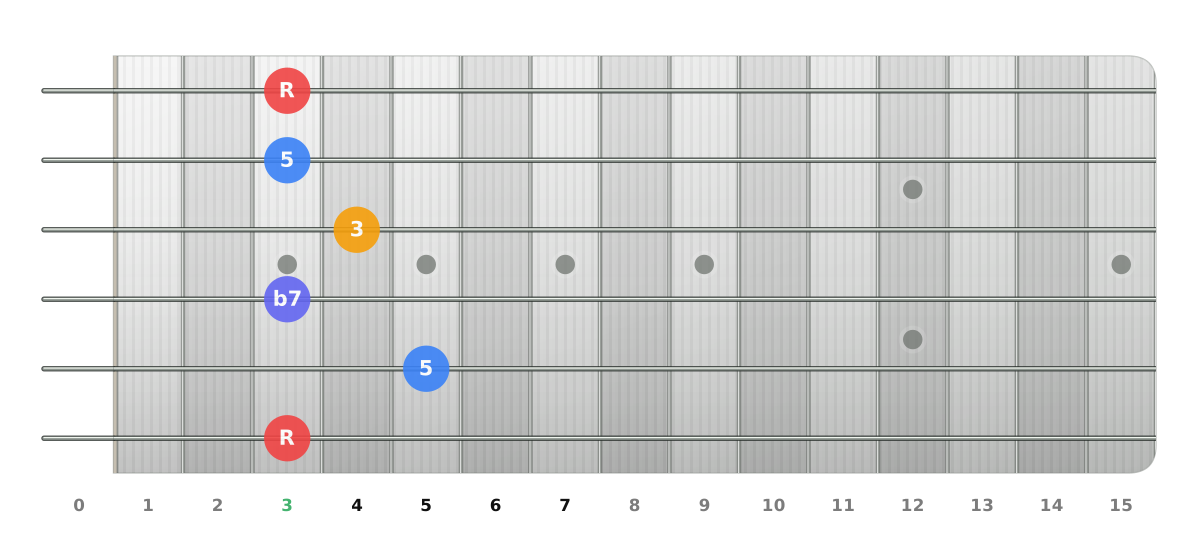
In the preview: V dominant 7 shape with quarter-note strums.

What it helps you practice

  • Finger accuracy5 out of 5: Core focus
  • Picking control3 out of 5: Useful support
  • Controlled speed2 out of 5: Occasional benefit
  • Fretboard knowledge4 out of 5: Strong focus
  • Songwriting & harmony5 out of 5: Core focus

Chord shapes bring several notes together to create the harmony behind a rhythm part. Practice fretting the shapes clearly and moving between them as the harmony changes.

In a course

Major Ionian Foundations introduces an I major 7 shape in Position 1 and a vi minor 7 shape in Position 3, both with quarter-note strums.

Explore Major Ionian Foundations

Progressions

In the preview: A chord sequence moving from I to vi to V.

What it helps you practice

  • Finger accuracy3 out of 5: Useful support
  • Picking control4 out of 5: Strong focus
  • Controlled speed2 out of 5: Occasional benefit
  • Fretboard knowledge3 out of 5: Useful support
  • Songwriting & harmony5 out of 5: Core focus

A chord progression lets you hear how harmony moves from one chord to another. Practice the changes in sequence while keeping the rhythm moving.

In a course

In the Relative Minor stage of Major Ionian Foundations, you practice moving from vi minor 7 to I major 7 and back in the other direction.

Explore Major Ionian Foundations

Jams

In the preview: A jam moving from V to I over a backing groove.

What it helps you practice

  • Finger accuracy3 out of 5: Useful support
  • Picking control4 out of 5: Strong focus
  • Controlled speed3 out of 5: Useful support
  • Fretboard knowledge4 out of 5: Strong focus
  • Songwriting & harmony5 out of 5: Core focus

A jam puts the notes and shapes you have practiced into a musical setting. Play phrases over a backing groove and listen to how they relate to the chords beneath them.

In a course

Major Ionian Foundations begins with a jam over the I chord in Position 1, then adds a jam that moves between I and vi.

Explore Major Ionian Foundations

Tips for getting more from guitar practice

A useful session does not have to cover everything. Give each part a purpose, then listen for how it connects to the rest of your playing.

Give your hands a clear job.
Choose a movement to work on, such as clean fretting or coordination between your hands. Mechanics exercises give you a focused place to repeat it.
Make room for accuracy.
Start at a pace where you can hear the notes clearly and keep the movement controlled. Explore more speed as the pattern becomes familiar.
Connect shapes to chords.
After learning a scale position, look for the chord tones and try a progression. That gives the notes a musical setting instead of leaving them as a pattern to memorize.
Leave time to play.
Use a jam to try a small phrase over backing harmony. Listen, change the rhythm, and see what you want to explore next.

ScaleModePro courses organize these kinds of activities into stages, so you can explore a sound through technique, fretboard shapes and musical application. The activities vary by course and stage.

Ready to choose a sound?

Once you know what you want to work on, choose a scale that makes you want to pick up the guitar. Our scale practice guide compares sounds, musical uses, and courses so you can find your next path.

Find a guitar scale to practice