ScaleModePro

Guitar Scale Practice: Find the Right Scale for Your Sound

The scale you choose can change the mood of a riff, the pull of a melody, or the way a solo sits over chords. Whether you want a familiar blues sound or a new color for your songwriting, start with what you want to hear.

Compare each scale’s character and creative possibilities, then explore a course to see its stages, lessons, and fretboard charts.

Choose a sound to explore

A scale is more than a pattern under your fingers. The notes you emphasize and the chords underneath can make it sound warm, restless, bluesy, or bright. These courses give you a way to explore those sounds across the fretboard, one stage at a time.

Start with pentatonic or blues if you are getting to know scale positions. Explore the modes and minor scales when you want more colors, or try bebop and symmetric dominant when you are ready for more harmonic tension. You can also browse the guitar scale library to see the shapes for yourself.

Once you choose, try a position slowly enough to hear each note. Change the rhythm, notice where the root sits, then try a short phrase over the course’s backing harmony. A scale becomes more useful when you can hear it in context as well as find it on the fretboard.

Not sure which activity to work on? Compare the types of guitar practice that bring these scales into your playing.

How to read the creative fit guide

These scores are our take on where each scale shines. A five is a favorite starting point; a one is an unusual choice that might lead somewhere interesting. Music does not follow a rating chart, so try what catches your ear. The courses explore scales and harmony rather than genre-specific songs. “Fretboard & harmony” reflects our take on each course’s opportunities to connect positions with harmony, rather than a musical style.

Start with the sound you want

Pentatonic and blues: find your footing

Start with a compact set of notes, explore five positions, and hear how a single added note can change the color of a phrase.

Major Pentatonic Foundations

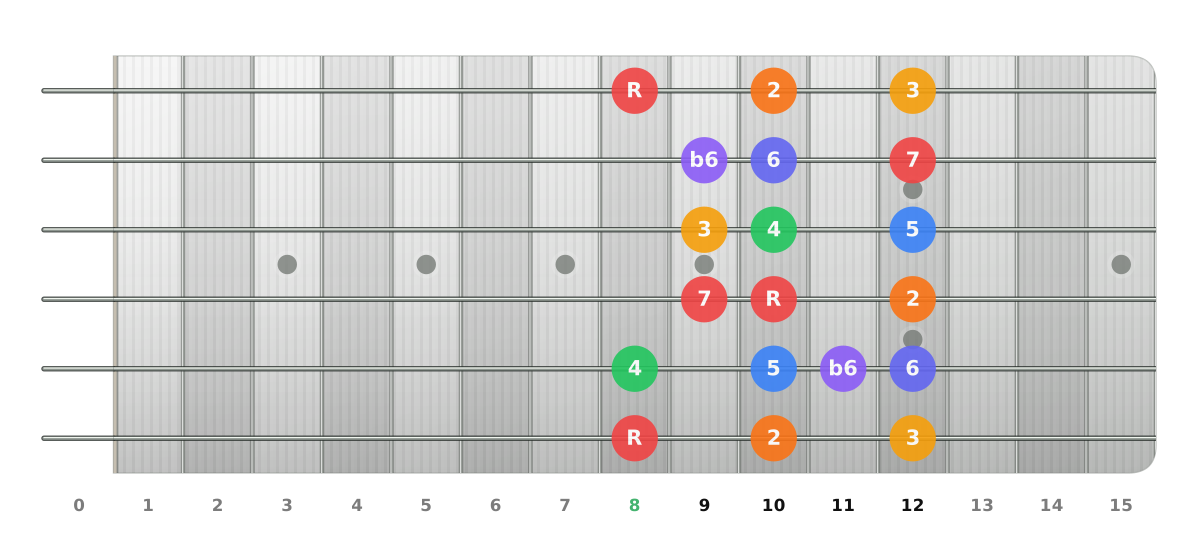
Major Pentatonic Foundations Major Pentatonic Position 1 Connections P1 Steps guitar fretboard preview.Explore this fretboard chart
A scale exercise from Stage 1: Tonic Box.

Creative fit

  • Pop & country5 out of 5: A favorite
  • Blues & rock4 out of 5: Strong fit
  • Jazz & fusion3 out of 5: Versatile
  • Modal songwriting2 out of 5: Adventurous
  • Fretboard & harmony3 out of 5: Versatile
  • Beginner
  • 5 stages
  • 24 lessons

The sound

Major pentatonic has an open, sunny sound. Its five notes leave space for a melody without the half steps of the full major scale.

Where to use it

Try it for a singing lead or a short fill over a major-key groove. The spare palette makes phrases easy to shape, though it leaves some major-scale colors for you to add elsewhere.

Best forBuilding melodic major-key leads and fills

Minor Pentatonic Foundations

Minor Pentatonic Foundations Minor Pentatonic Position 1 Connections P1 Steps guitar fretboard preview.Explore this fretboard chart
A scale exercise from Stage 1: Tonic Minor Box.

Creative fit

  • Pop & country4 out of 5: Strong fit
  • Blues & rock5 out of 5: A favorite
  • Jazz & fusion3 out of 5: Versatile
  • Modal songwriting2 out of 5: Adventurous
  • Fretboard & harmony3 out of 5: Versatile
  • Beginner
  • 5 stages
  • 24 lessons

The sound

Minor pentatonic has a direct, earthy sound built around the minor third and flat seventh. Its five notes leave out the second and sixth that distinguish several minor modes.

Where to use it

Use it for a rock riff or a solo with room for bends and rhythmic variation. For a more specific minor-mode color, listen to what those missing notes could add.

Best forCreating expressive minor-key riffs and solos
Explore Minor Pentatonic Foundations

Major Blues Foundations

Major Blues Foundations Major Blues Position 1 Connections P1 Steps guitar fretboard preview.Explore this fretboard chart
A scale exercise from Stage 1: Tonic Blues Box.

Creative fit

  • Pop & country5 out of 5: A favorite
  • Blues & rock5 out of 5: A favorite
  • Jazz & fusion3 out of 5: Versatile
  • Modal songwriting1 out of 5: Unexpected
  • Fretboard & harmony3 out of 5: Versatile
  • Beginner
  • 5 stages
  • 24 lessons

The sound

Major blues adds a flat third to major pentatonic. That note creates a bluesy rub as it moves toward the major third.

Where to use it

Try the flat third as a passing color in a major-key fill or a twelve-bar solo. Letting it resolve can make the difference between a bright phrase with bite and a note that lingers in tension.

Best forAdding blues color to major-key phrases
Explore Major Blues Foundations

Minor Blues Foundations

Minor Blues Foundations Minor Blues Position 1 Connections P1 Steps guitar fretboard preview.Explore this fretboard chart
A scale exercise from Stage 1: Tonic Minor Blues Box.

Creative fit

  • Pop & country3 out of 5: Versatile
  • Blues & rock5 out of 5: A favorite
  • Jazz & fusion4 out of 5: Strong fit
  • Modal songwriting2 out of 5: Adventurous
  • Fretboard & harmony3 out of 5: Versatile
  • Beginner
  • 5 stages
  • 24 lessons

The sound

Minor blues adds a flat fifth between the fourth and fifth of minor pentatonic. The extra note gives the familiar minor sound a sharp, unsettled edge.

Where to use it

Bring that note into a gritty riff or a blues lead, then release it into a more stable tone. It can give a phrase bite in passing, while too much emphasis keeps the tension exposed.

Best forWriting gritty riffs and blues-inflected leads
Explore Minor Blues Foundations

Modes and minor scales: explore more colors

Expand the map and listen for the notes that give each major or minor sound its own character.

Major Ionian Foundations

Major Ionian Foundations I Shape in Position 1 P1 Steps guitar fretboard preview.Explore this fretboard chart
A scale exercise from Stage 1: Tonic Foundations.

Creative fit

  • Pop & country5 out of 5: A favorite
  • Blues & rock4 out of 5: Strong fit
  • Jazz & fusion4 out of 5: Strong fit
  • Modal songwriting3 out of 5: Versatile
  • Fretboard & harmony5 out of 5: A favorite
  • Intermediate
  • 7 stages
  • 41 lessons

The sound

Ionian is the familiar major scale: its major third sounds bright, and its seventh sits a half step below the root, giving it a strong pull home.

Where to use it

Use it for a clear major-key melody or to follow the changing chords in a progression. Its seven notes offer more harmonic detail than a pentatonic scale, so each note's relationship to the chord matters.

Best forConnecting major melodies, chords, and fretboard positions
Explore Major Ionian Foundations

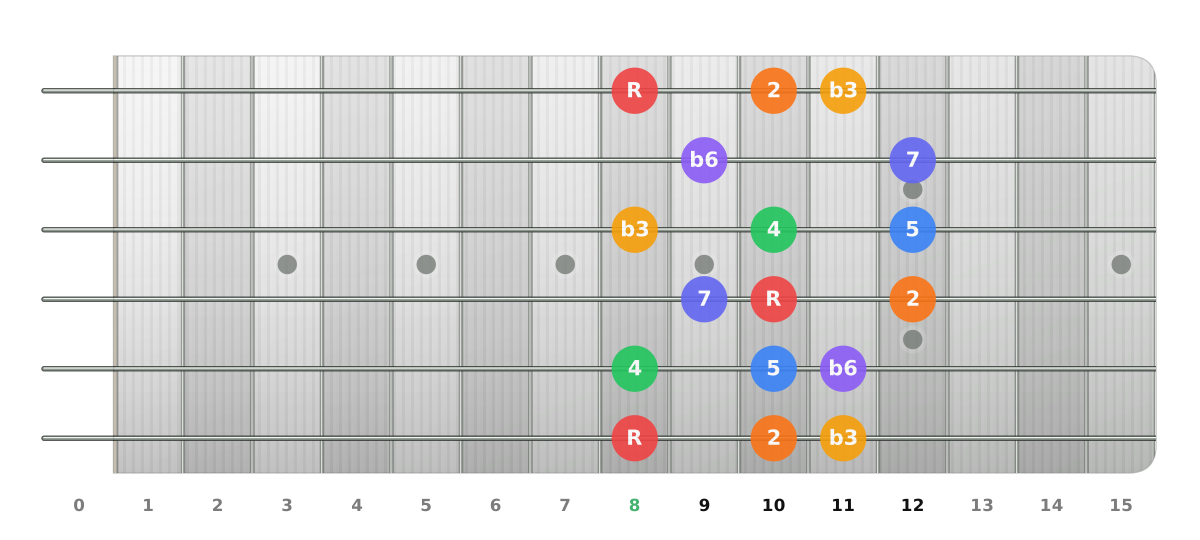
Natural Minor Foundations

Natural Minor Foundations i Shape in Position 1 P1 Steps guitar fretboard preview.Explore this fretboard chart
A scale exercise from Stage 1: Tonic Minor Foundations.

Creative fit

  • Pop & country5 out of 5: A favorite
  • Blues & rock5 out of 5: A favorite
  • Jazz & fusion3 out of 5: Versatile
  • Modal songwriting5 out of 5: A favorite
  • Fretboard & harmony5 out of 5: A favorite
  • Intermediate
  • 7 stages
  • 41 lessons

The sound

Natural minor, also called Aeolian, has a reflective color shaped by its minor third, flat sixth, and flat seventh. Its native minor v chord gives a softer return than a major V.

Where to use it

Try it for a dark melody over a minor-key progression, or let the flat sixth color a sustained phrase. A borrowed major V creates a stronger pull, but changes the purely natural-minor sound.

Best forWriting minor-key melodies and progressions
Explore Natural Minor Foundations

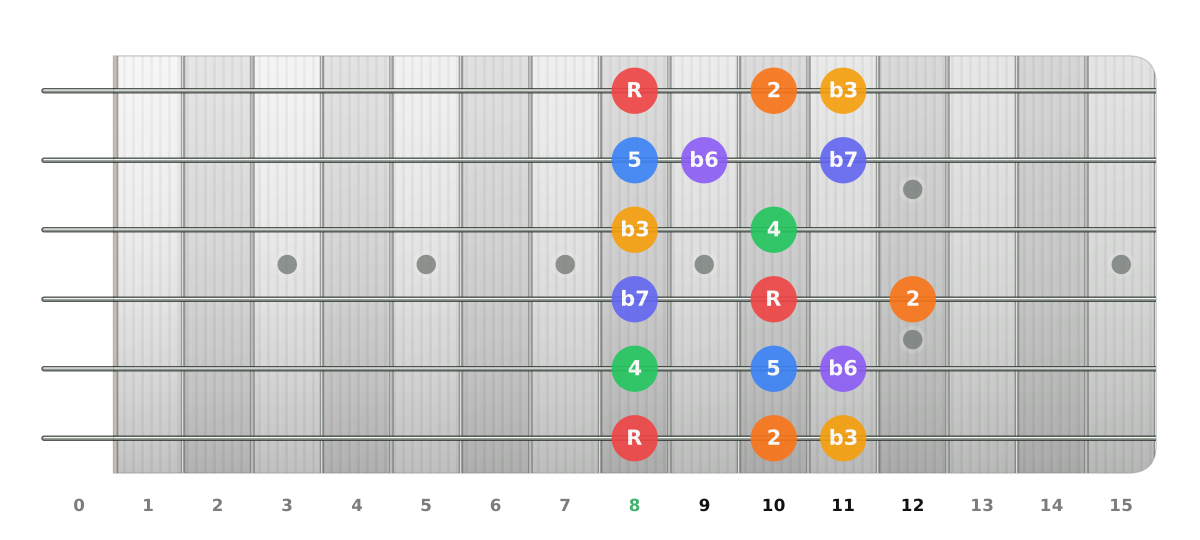
Mixolydian Foundations

Mixolydian Foundations I Shape in Position 1 P1 Steps guitar fretboard preview.Explore this fretboard chart
A scale exercise from Stage 1: Dominant Tonic Foundations.

Creative fit

  • Pop & country5 out of 5: A favorite
  • Blues & rock5 out of 5: A favorite
  • Jazz & fusion4 out of 5: Strong fit
  • Modal songwriting5 out of 5: A favorite
  • Fretboard & harmony4 out of 5: Strong fit
  • Intermediate
  • 7 stages
  • 41 lessons

The sound

Mixolydian pairs a major third with a flat seventh. The result is major in character but earthier and less tightly resolved than the familiar major scale.

Where to use it

Play it over a major-centered rock or bluesy groove and bring out the flat seventh in a riff. A major-scale leading tone would give the phrase a different, stronger pull toward home.

Best forCreating major grooves with a flat-seven color
Explore Mixolydian Foundations

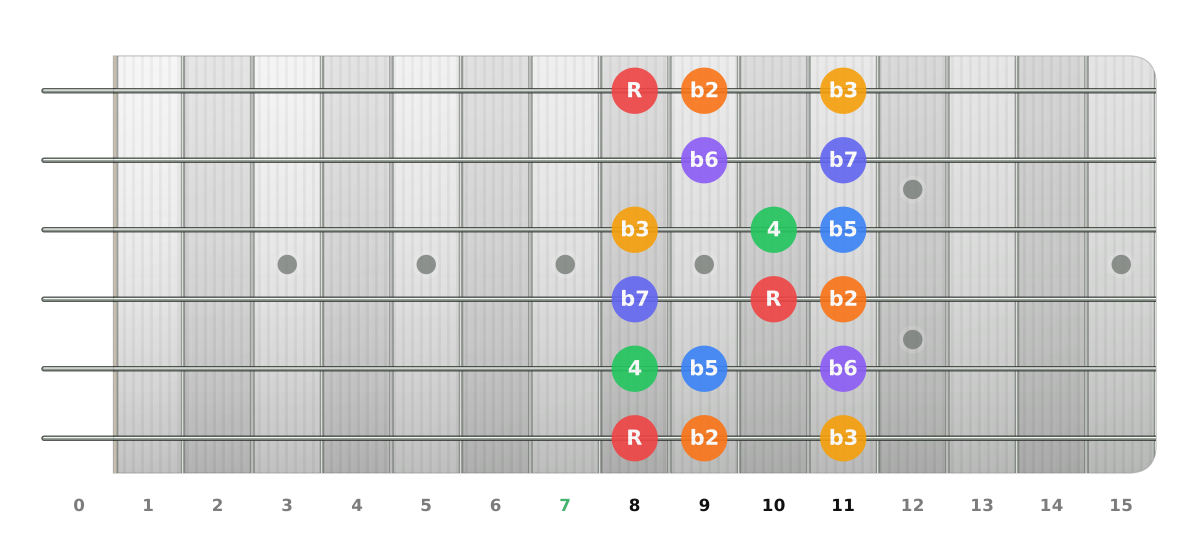
Locrian Foundations

Locrian Foundations i° Shape in Position 1 P1 Steps guitar fretboard preview.Explore this fretboard chart
A scale exercise from Stage 1: Half-Diminished Center.

Creative fit

  • Pop & country1 out of 5: Unexpected
  • Blues & rock2 out of 5: Adventurous
  • Jazz & fusion4 out of 5: Strong fit
  • Modal songwriting4 out of 5: Strong fit
  • Fretboard & harmony4 out of 5: Strong fit
  • Intermediate
  • 7 stages
  • 41 lessons

The sound

Locrian's flat second lies a half step above the root, while its flat fifth weakens the sense of a settled minor chord. Together they make a dark, unstable center.

Where to use it

A held bass note or a short, tense passage can give that instability room to be heard. Longer chord movement can pull the ear toward a more stable center, so listen for where the phrase feels at rest.

Best forExploring unstable, dark modal textures
Explore Locrian Foundations

Lydian Foundations

Lydian Foundations I Shape in Position 1 P1 Steps guitar fretboard preview.Explore this fretboard chart
A scale exercise from Stage 1: Lydian Tonic Foundations.

Creative fit

  • Pop & country4 out of 5: Strong fit
  • Blues & rock3 out of 5: Versatile
  • Jazz & fusion5 out of 5: A favorite
  • Modal songwriting5 out of 5: A favorite
  • Fretboard & harmony4 out of 5: Strong fit
  • Intermediate
  • 7 stages
  • 41 lessons

The sound

Lydian has a major third and a raised fourth, giving a bright major sound a floating tension. That raised note is what sets it apart from ordinary major.

Where to use it

Let the raised fourth ring in a spacious melody or play over a major-to-II vamp. If the phrase avoids that note, the Lydian color can be harder to distinguish from major.

Best forWriting spacious major melodies with a raised-fourth color
Explore Lydian Foundations

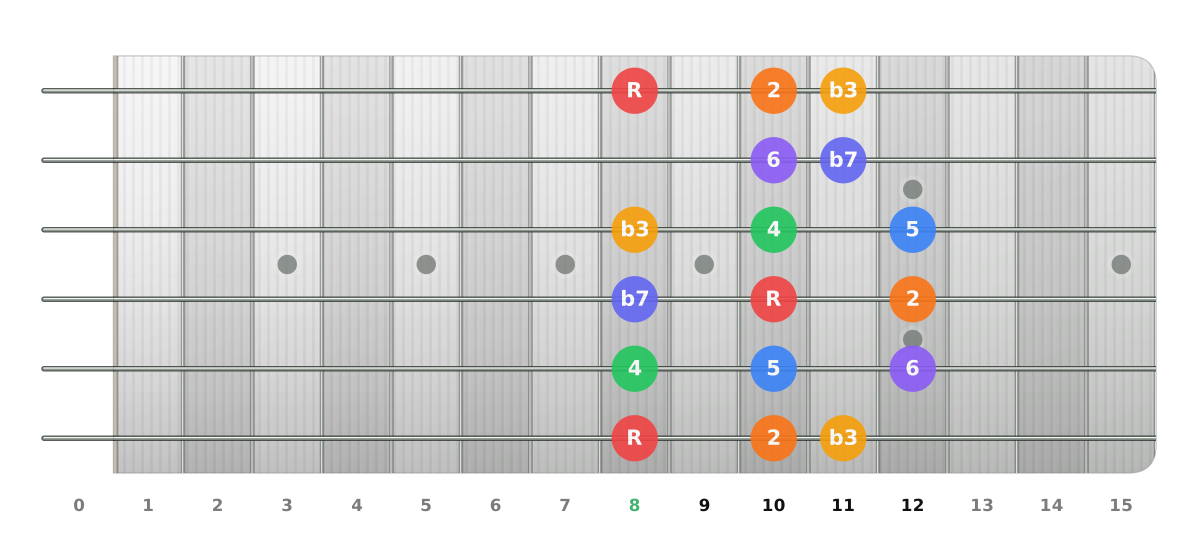
Dorian Foundations

Dorian Foundations i Shape in Position 1 P1 Steps guitar fretboard preview.Explore this fretboard chart
A scale exercise from Stage 1: Dorian Tonic Foundations.

Creative fit

  • Pop & country4 out of 5: Strong fit
  • Blues & rock5 out of 5: A favorite
  • Jazz & fusion5 out of 5: A favorite
  • Modal songwriting5 out of 5: A favorite
  • Fretboard & harmony4 out of 5: Strong fit
  • Intermediate
  • 7 stages
  • 41 lessons

The sound

Dorian combines a minor third with a natural sixth. That sixth lifts the sound compared with natural minor while the minor center remains intact.

Where to use it

Try it over a minor funk or rock vamp, emphasizing the sixth in a riff or solo. Without that note or supporting harmony, a line can sound like a more general minor phrase.

Best forAdding a brighter color to minor grooves

Phrygian Foundations

Phrygian Foundations i Shape in Position 1 P1 Steps guitar fretboard preview.Explore this fretboard chart
A scale exercise from Stage 1: Phrygian Tonic Foundations.

Creative fit

  • Pop & country2 out of 5: Adventurous
  • Blues & rock4 out of 5: Strong fit
  • Jazz & fusion3 out of 5: Versatile
  • Modal songwriting5 out of 5: A favorite
  • Fretboard & harmony4 out of 5: Strong fit
  • Intermediate
  • 7 stages
  • 41 lessons

The sound

Phrygian places a flat second just a half step above its minor root. That close spacing creates a dark, urgent color.

Where to use it

A repeating minor vamp or heavy riff can make the flat second unmistakable. Broader chord movement may shift the listener's sense of home, so return to the minor center to keep the color clear.

Best forBuilding tense minor vamps and melodies
Explore Phrygian Foundations

Harmonic Minor Foundations

Harmonic Minor Foundations i(mMaj7) Shape in Position 1 P1 Steps guitar fretboard preview.Explore this fretboard chart
A scale exercise from Stage 1: Tonic Minor Center.

Creative fit

  • Pop & country3 out of 5: Versatile
  • Blues & rock4 out of 5: Strong fit
  • Jazz & fusion4 out of 5: Strong fit
  • Modal songwriting4 out of 5: Strong fit
  • Fretboard & harmony5 out of 5: A favorite
  • Intermediate
  • 7 stages
  • 41 lessons

The sound

Harmonic minor raises natural minor's seventh, creating a strong pull to the root and a distinctive gap between the sixth and seventh. The sound can feel dramatic and unresolved until it lands.

Where to use it

Use it over a minor-key dominant chord when you want a more pronounced return to the tonic. Its raised seventh gives a different effect from the softer minor v of natural minor.

Best forCreating dramatic minor-key resolutions
Explore Harmonic Minor Foundations

Melodic Minor Foundations

Melodic Minor Foundations i(mMaj7) Shape in Position 1 P1 Steps guitar fretboard preview.Explore this fretboard chart
A scale exercise from Stage 1: Directional Tonic Minor.

Creative fit

  • Pop & country3 out of 5: Versatile
  • Blues & rock3 out of 5: Versatile
  • Jazz & fusion2 out of 5: Adventurous
  • Modal songwriting3 out of 5: Versatile
  • Fretboard & harmony4 out of 5: Strong fit
  • Intermediate
  • 7 stages
  • 41 lessons

The sound

Classical melodic minor raises the sixth and seventh on the way up, then uses natural minor's flat sixth and flat seventh on the way down. The result is a smooth ascent followed by a darker descent.

Where to use it

Try it in a minor melody that rises toward the root and relaxes on the way back down. The direction matters: the same note choices do not apply to both legs of the line.

Best forShaping ascending and descending minor melodies
Explore Melodic Minor Foundations

Bebop and symmetric scales: play with tension

Explore passing tones and dominant harmony, then listen for how a line finds its way home.

Bebop Foundations

Bebop Foundations I6 Lines in Position 1 P1 Steps guitar fretboard preview.Explore this fretboard chart
A scale exercise from Stage 1: Tonic-Six Landing.

Creative fit

  • Pop & country2 out of 5: Adventurous
  • Blues & rock3 out of 5: Versatile
  • Jazz & fusion5 out of 5: A favorite
  • Modal songwriting1 out of 5: Unexpected
  • Fretboard & harmony4 out of 5: Strong fit
  • Advanced
  • 7 stages
  • 41 lessons

The sound

Ionian bebop adds a flat-six passing tone to the major scale. That extra half step gives an otherwise familiar major sound a flowing, chromatic color.

Where to use it

Try it in an eighth-note jazz line, using the passing tone to move between more settled notes. The rhythm and starting point affect where chord tones land, so the extra note is not an automatic solution for every phrase.

Best forMaking flowing lines with clear chord-tone landings
Explore Bebop Foundations

Symmetric Dominant Foundations

Symmetric Dominant Foundations Half–Whole Lines in Position 1 P1 Steps guitar fretboard preview.Explore this fretboard chart
A scale exercise from Stage 1: Dominant Flat Nine.

Creative fit

  • Pop & country1 out of 5: Unexpected
  • Blues & rock3 out of 5: Versatile
  • Jazz & fusion5 out of 5: A favorite
  • Modal songwriting2 out of 5: Adventurous
  • Fretboard & harmony4 out of 5: Strong fit
  • Advanced
  • 5 stages
  • 30 lessons

The sound

The half-whole diminished scale alternates half steps and whole steps. Over a dominant chord its flat ninth and other close-set notes create a dense, tense sound.

Where to use it

Try it over a dominant chord leading into a jazz cadence, then resolve the line as the harmony moves home. Its tension is striking, so the destination matters as much as the run itself.

Best forAdding tension and resolution over dominant chords
Explore Symmetric Dominant Foundations

Tips for choosing and practicing a guitar scale

The best scale to practice is one that gives you a sound or musical question you want to explore. Use these ideas to make your choice useful.

Start with a sound you like.
Want a major-key melody or a bluesy lead? Compare major pentatonic and minor blues, then follow the sound that catches your ear.
Find the root, not just the shape.
Notice where the root appears in a position and listen to how other notes lead toward or away from it. Use the course’s fretboard chart to see the pattern.
Hear it against harmony.
Try a few notes over a chord or backing progression. The same shape can suggest different phrases when you listen to the chord underneath.
Build outward one stage at a time.
Get comfortable with an initial position, then explore another. Each course’s stage breakdown shows how it moves through positions and musical ideas.
Turn the pattern into a phrase.
Change the rhythm, leave a little space, and return to a note you like. A short musical idea can tell you more than another uninterrupted run through the shape.

The course previews show their stages, lessons and related fretboard charts. Explore one that interests you, or revisit the types of guitar practice for more ways to work with it.