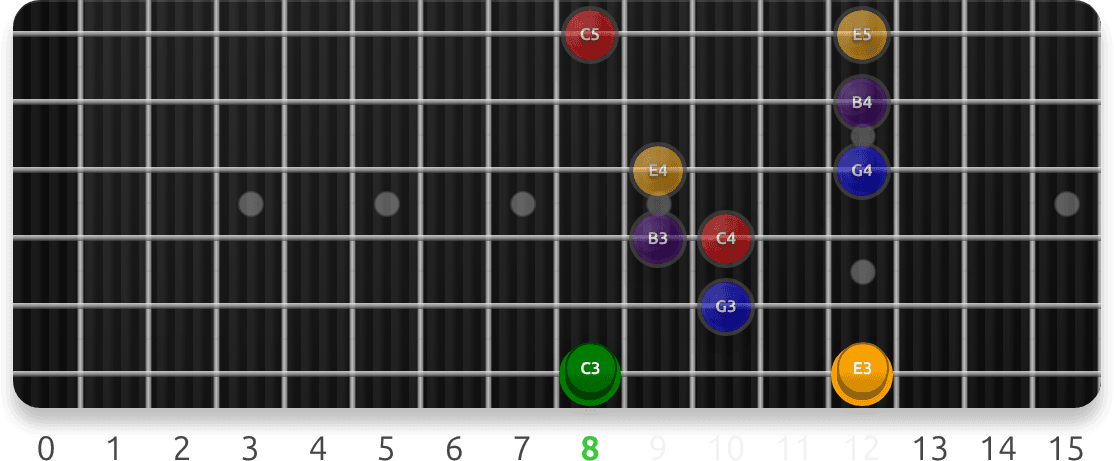
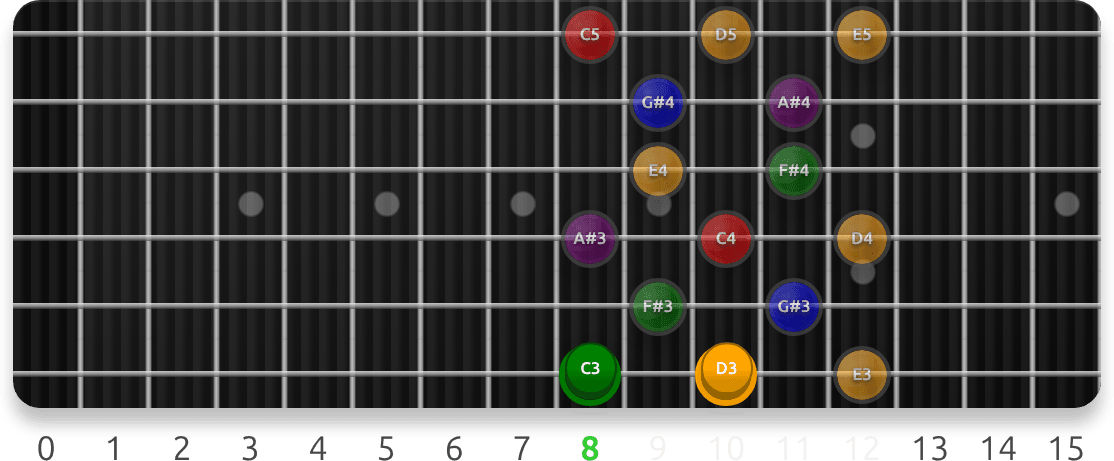
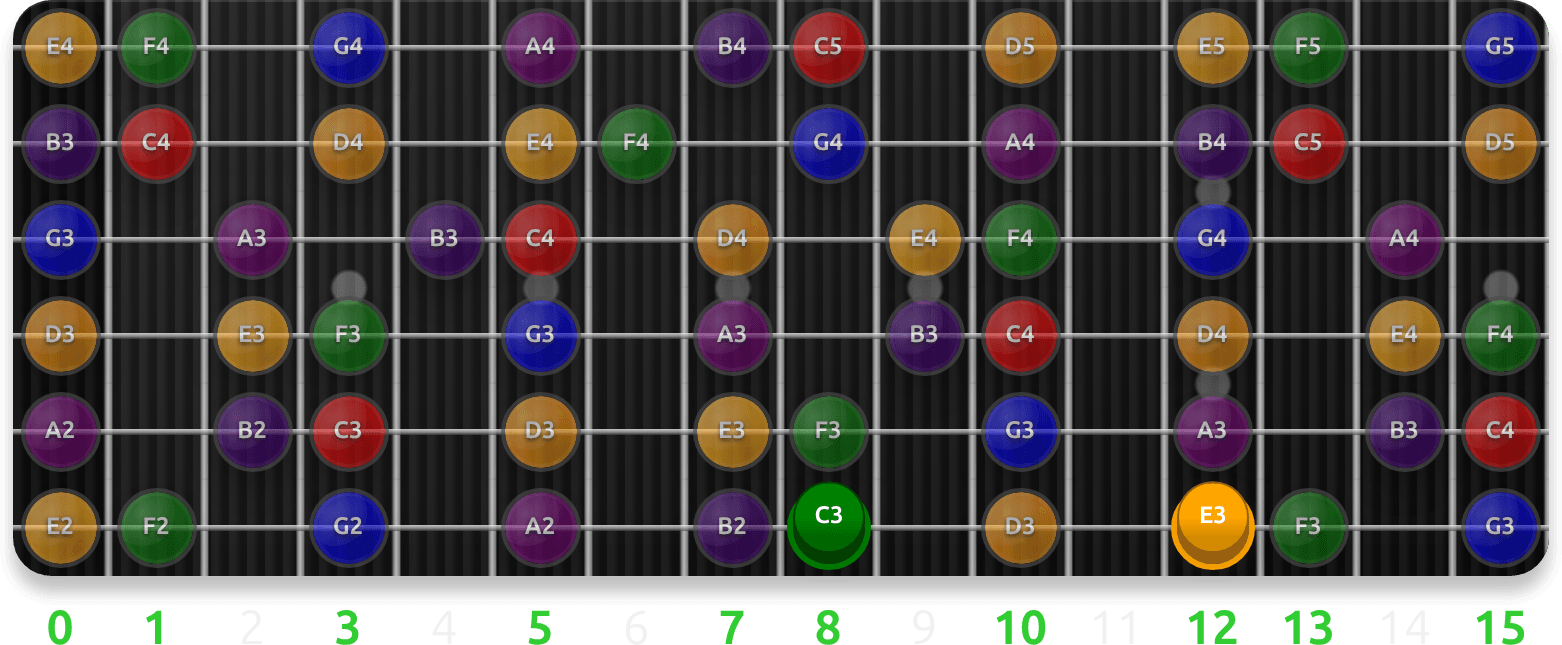
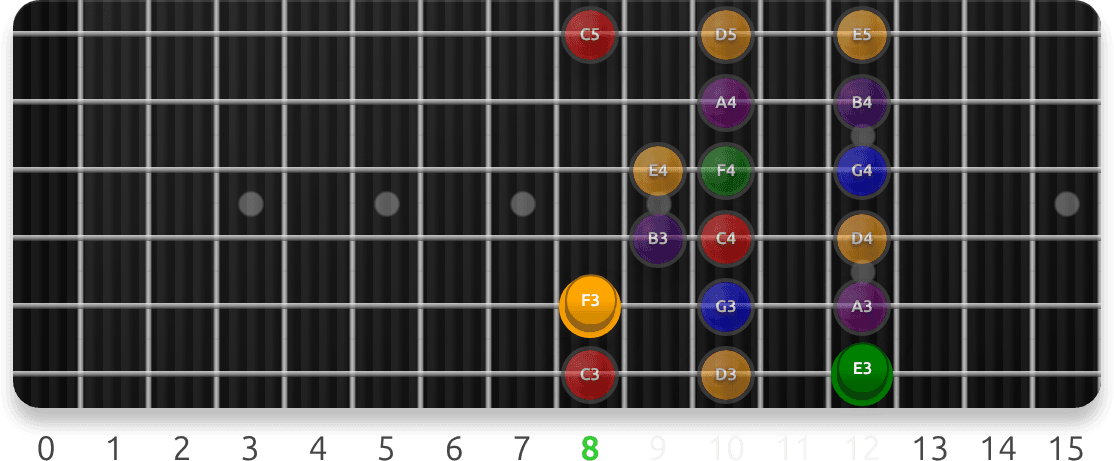
What is the fastest way to learn the guitar fretboard?
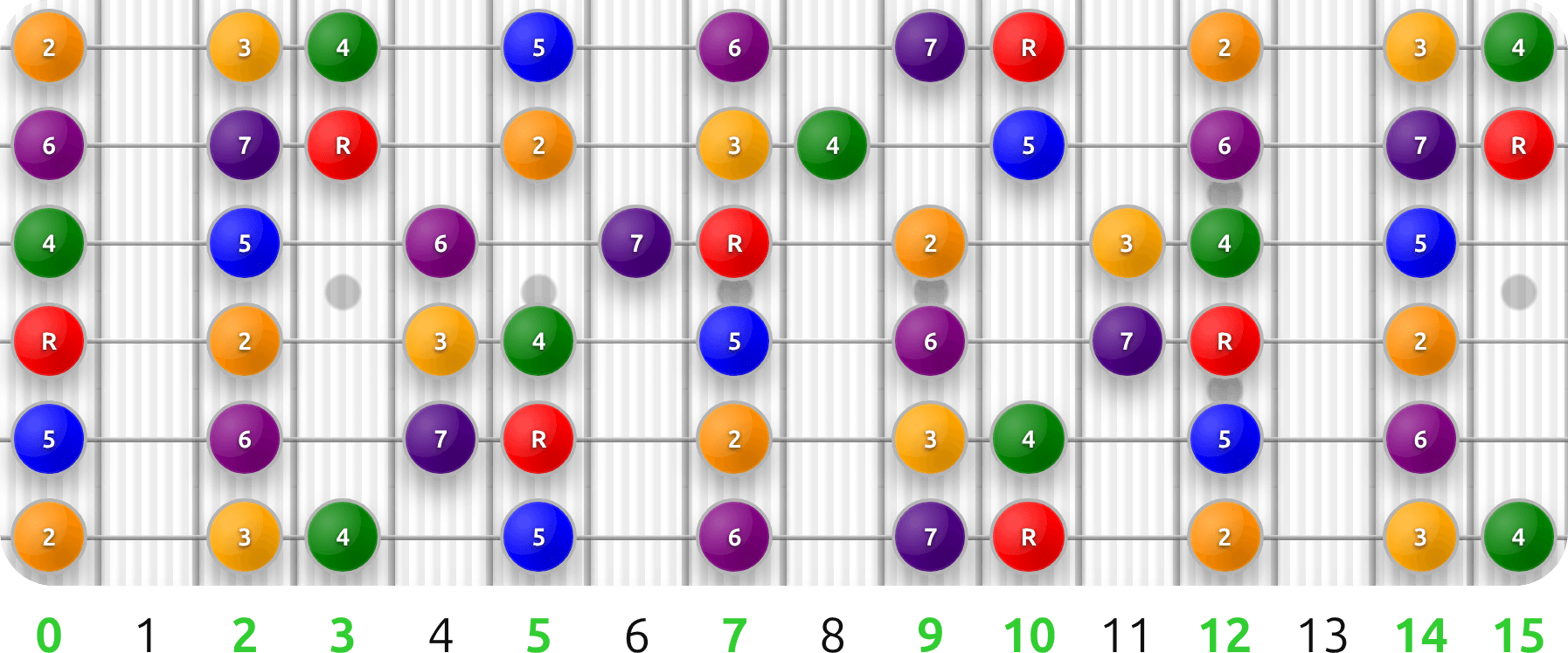
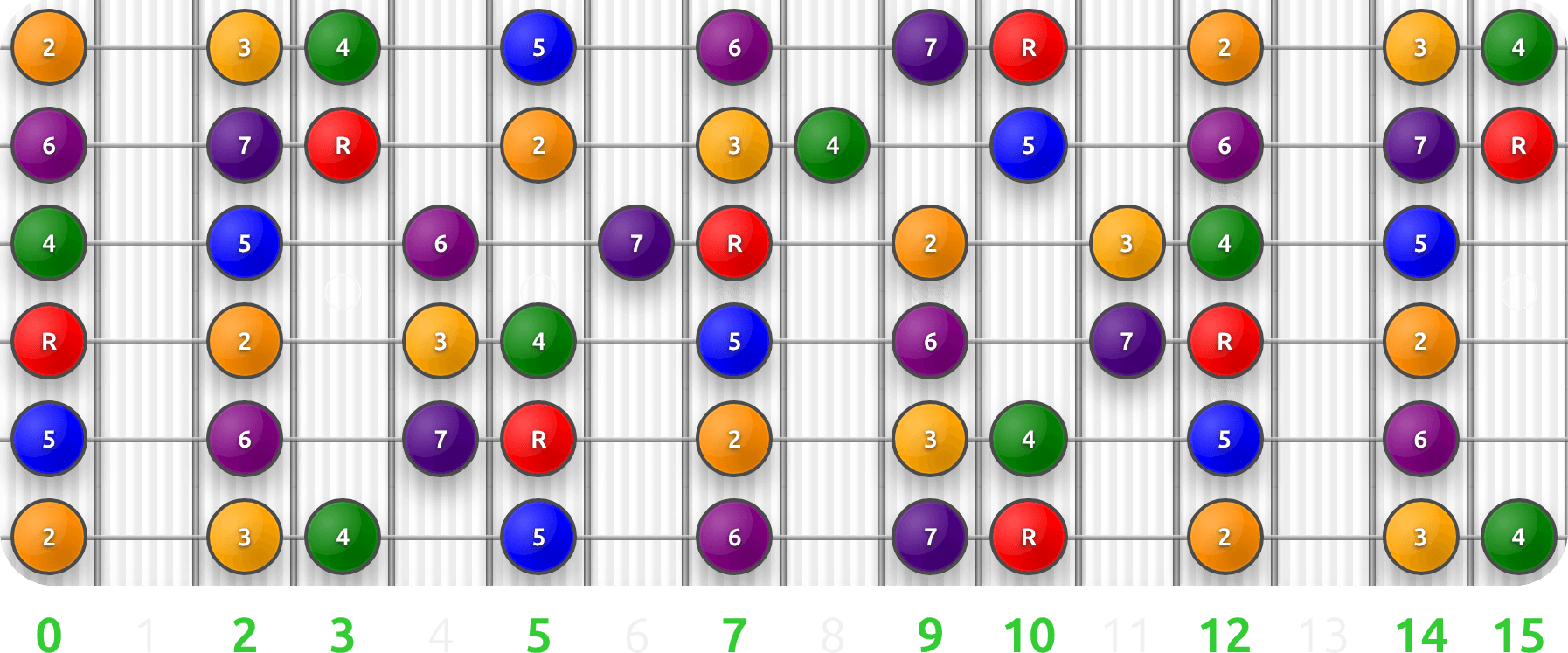
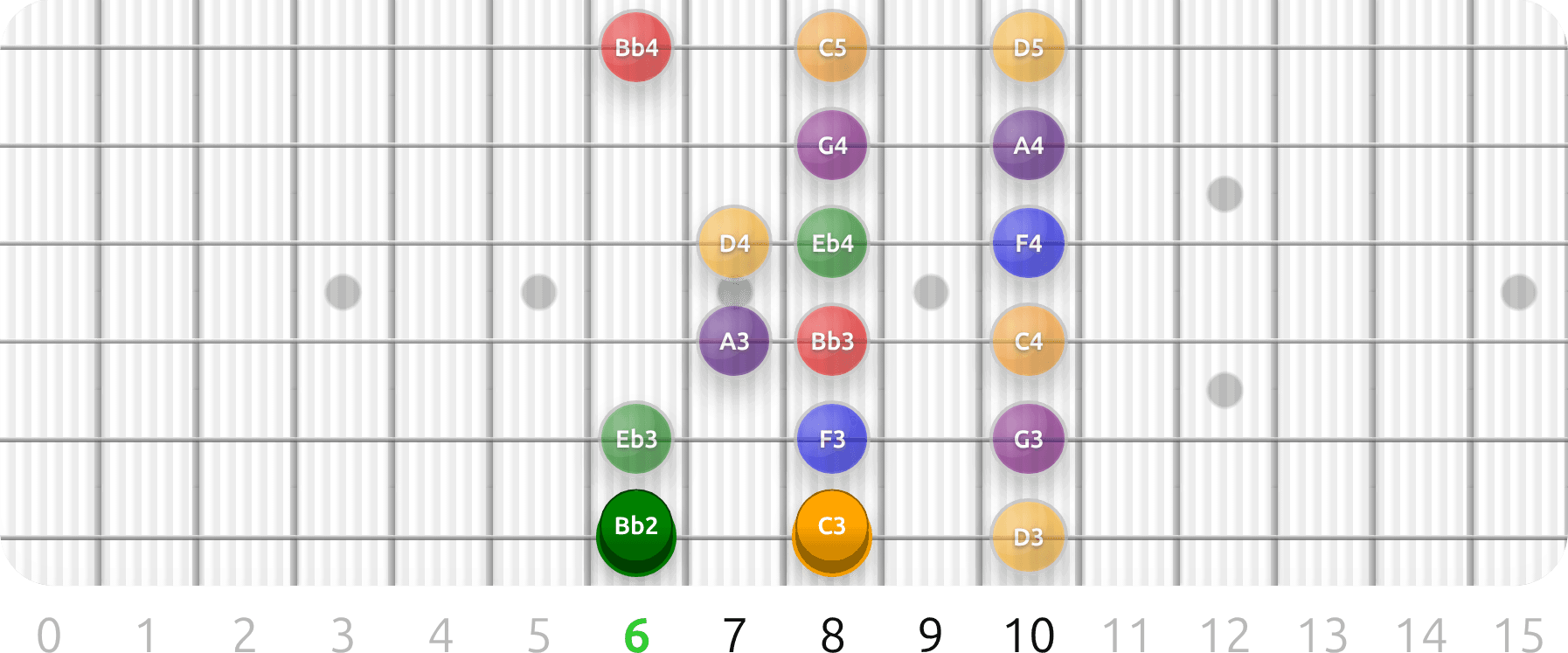
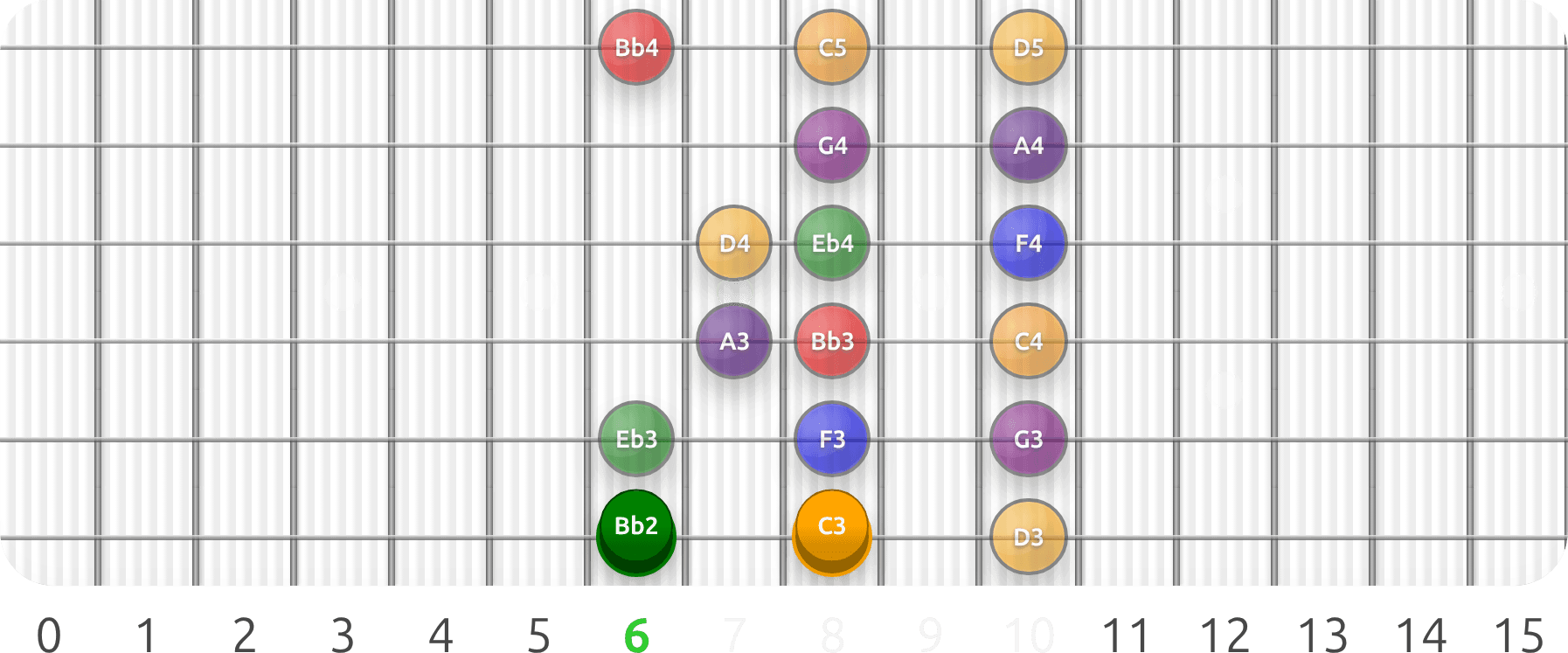
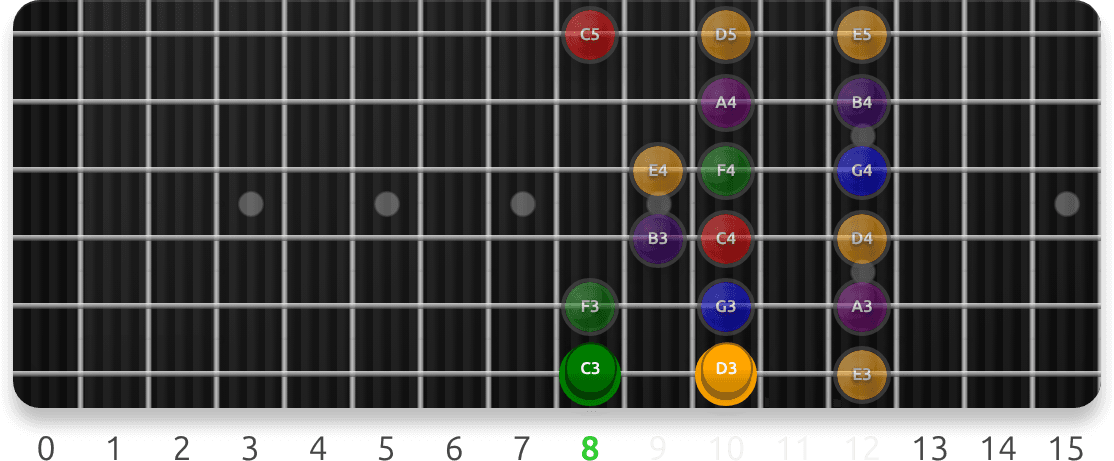
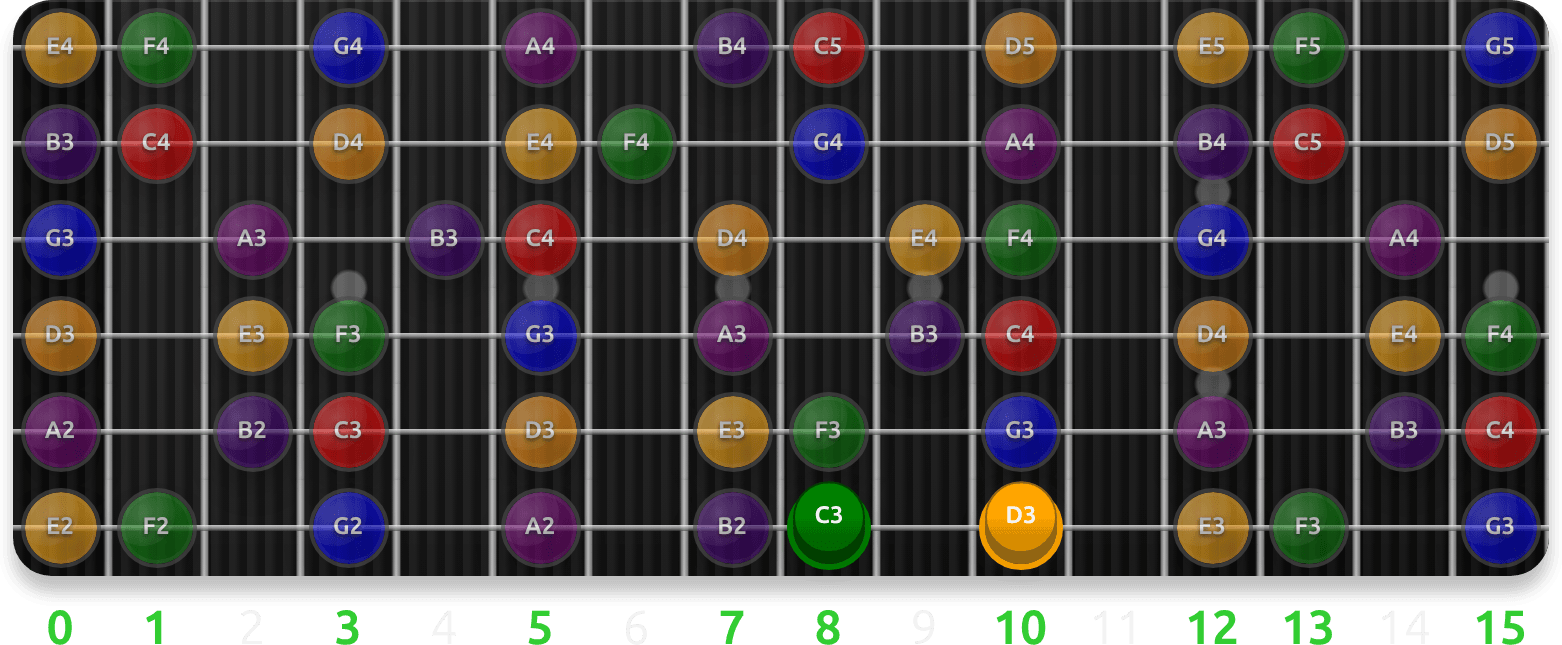
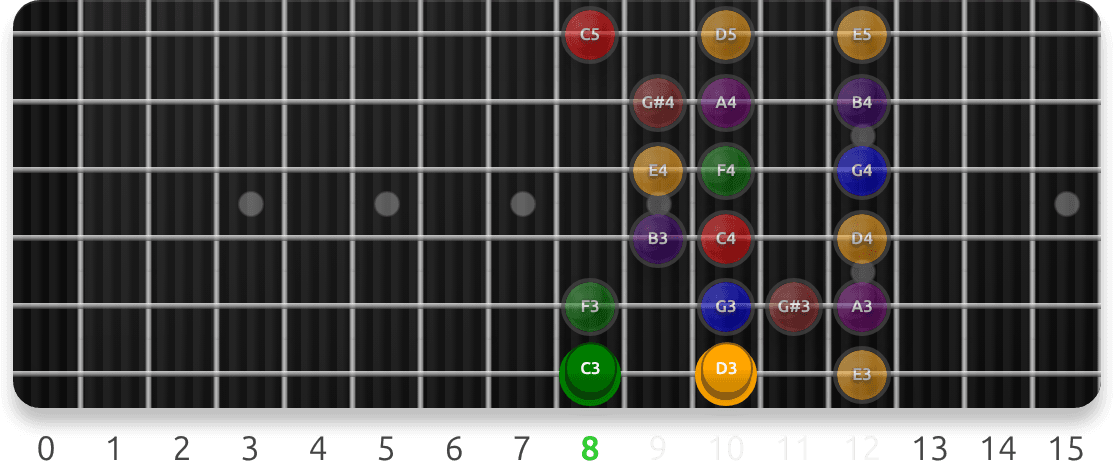
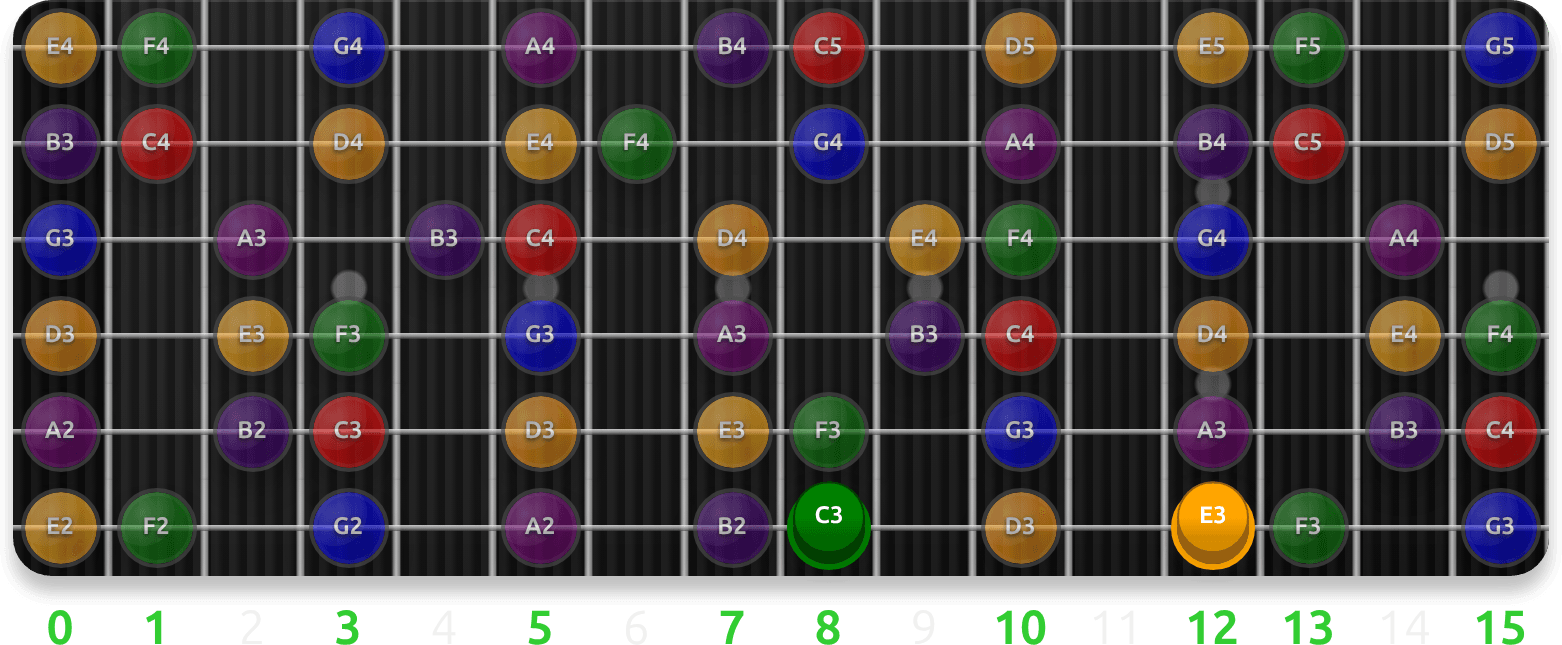
The fastest path is turning the neck into a repeatable map: learn octave shapes, then connect them to scale degrees (1–7) instead of isolated note names. In ScaleMode.Pro, you can practice any key and see the fretboard as degrees and chord tones, which helps you stop guessing and start navigating.
Is there an app that listens to your guitar while you practice scales?
Yes. ScaleMode.Pro exercises listen to your playing in real time using pitch detection, so you get immediate feedback as you move through scale and arpeggio shapes. That makes practice more honest because you cannot “think you played it” and move on.
How do I practice scales in every key without memorizing 12 different patterns?
Learn one position system, then move the same interval map to new roots. ScaleMode.Pro lets you switch keys instantly (including common sharp and flat spellings), so you train the same shape across different roots and build true “any key” fluency.
What does “position” mean for guitar scales?
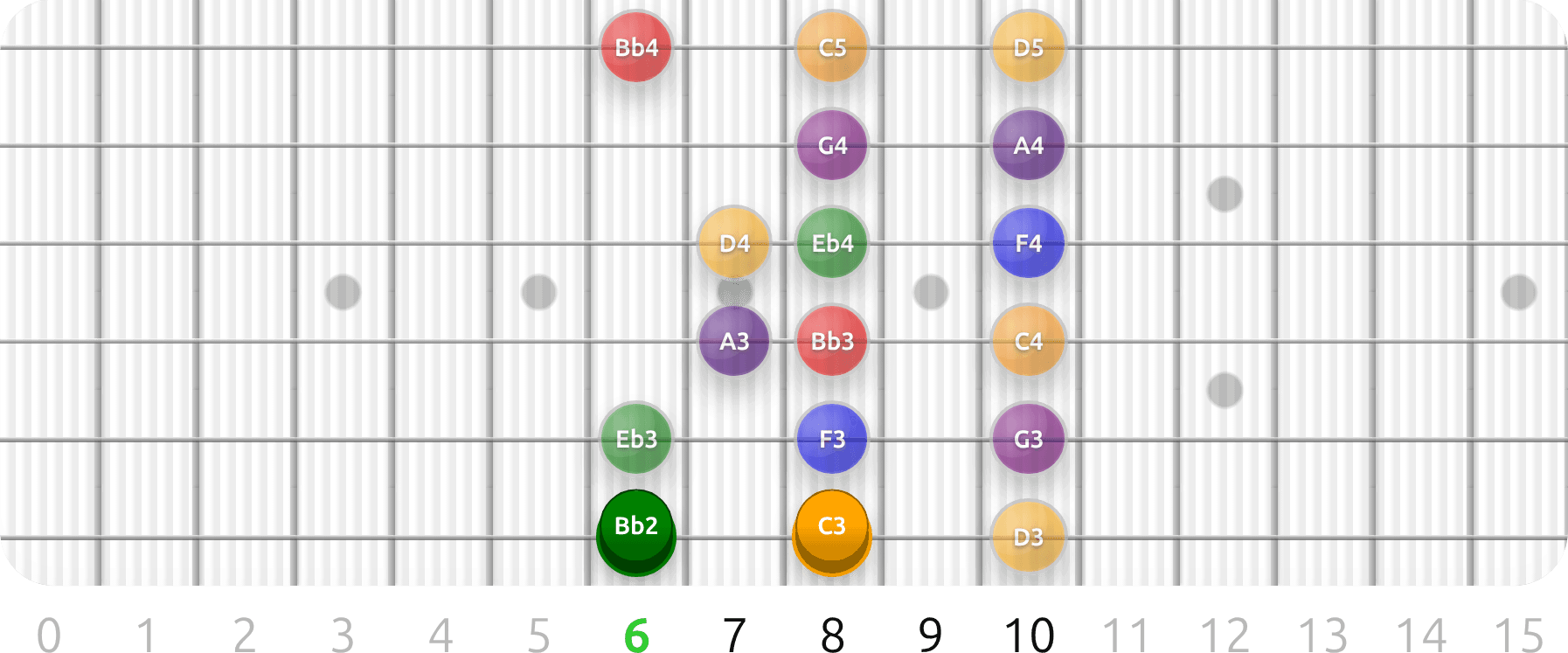
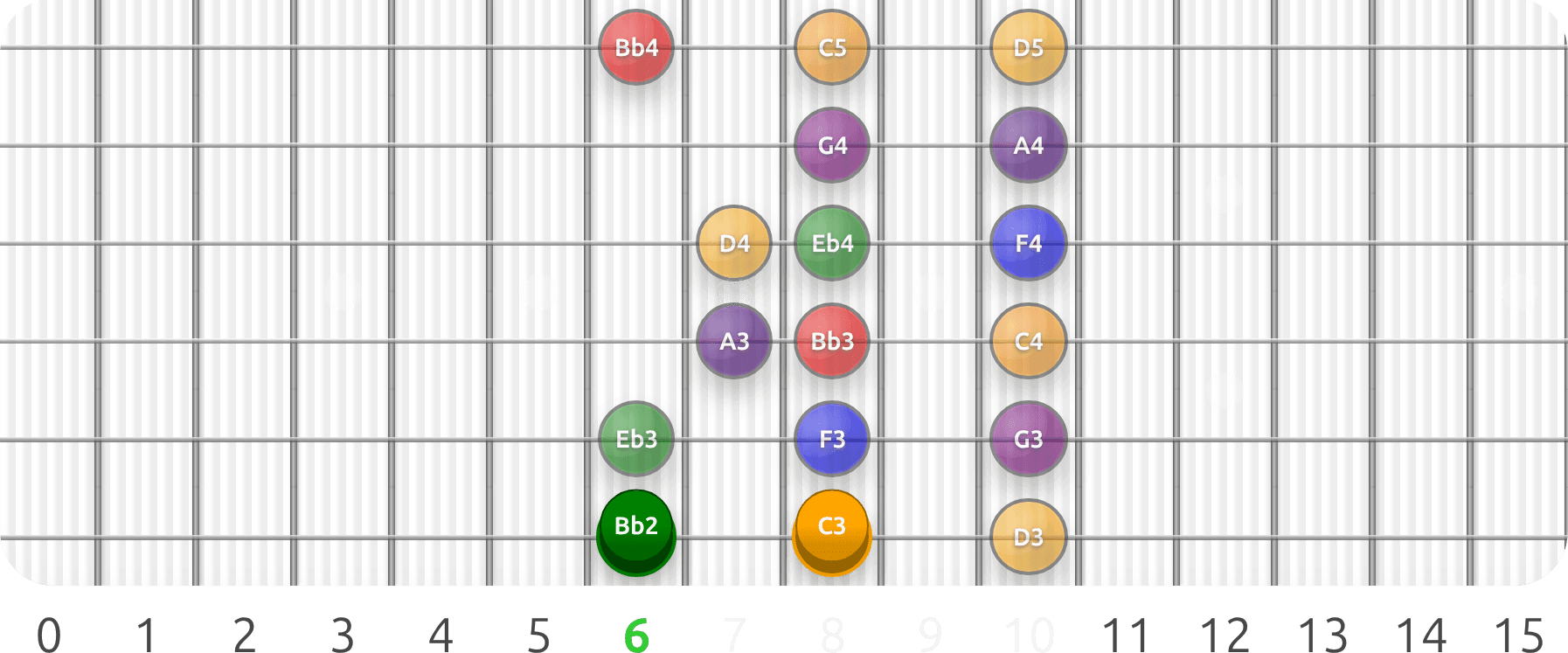
A position is a fretboard zone where your hand stays mostly in one place. Positions matter because they connect your technique to navigation. In ScaleMode.Pro you can choose positions per scale family (1–7 for most diatonic-style systems, 1–5 for pentatonic-style systems) and focus on one box without losing the bigger map.
How do I connect scale positions across the neck?
Use overlap notes and shared targets. Adjacent positions share multiple notes, so you can “hand off” a phrase by aiming at a shared degree like 1, 3, 5, or b7. ScaleMode.Pro supports multi-position viewing so you can see how shapes connect instead of treating boxes like separate islands.
How do I stop getting lost when I change positions mid-solo?
Pick one anchor per position, usually the root on a strong string, then aim phrases at chord tones (3rd and 7th are big ones). ScaleMode.Pro labels degrees and chord tones on the fretboard, which makes it easier to keep your bearings when you shift.
Major pentatonic vs minor pentatonic: which should I learn first?
If you play blues and rock, start with minor pentatonic. If you play pop, country, and brighter major-key lead sounds, major pentatonic matters early. ScaleMode.Pro lets you switch scale family, mode, and key quickly, so you can practice both colors and learn when each one sounds right.
Blues scale vs minor pentatonic: what is the difference?
Minor pentatonic is a 5-note sound. The blues scale adds one extra “blue note” for tension, so it has more bite and motion. ScaleMode.Pro makes this easier to internalize by showing the degree/interval map and letting you drill phrasing patterns with live note checking.
What scale should I use to solo over a 12-bar blues?
A strong default is minor pentatonic and blues scale, then target chord tones as the harmony moves. Many players also mix major pentatonic ideas for a sweeter sound, especially over the I chord. In ScaleMode.Pro you can switch chord-tone focus on (triads or sevenths) to train the targets that make blues lines sound connected to the changes.
What are modes on guitar, in plain English?
Modes are the same note set heard with a different home base. The mode sound is not the shape by itself. It shows up when the harmony supports that center. ScaleMode.Pro helps by letting you pick scale family and mode, then map degrees so the “identity notes” of each mode stand out while you practice.
How do I actually hear modes instead of memorizing shapes?
Treat modes like a targeted color: pick one defining degree and write short phrases that land on it. For example, Dorian feels like minor with a natural 6, so you practice lines that highlight that 6 and resolve cleanly. ScaleMode.Pro’s degree labels make it obvious what you are aiming at while the exercise listens for accuracy.
How do I practice arpeggios on guitar without it feeling random?
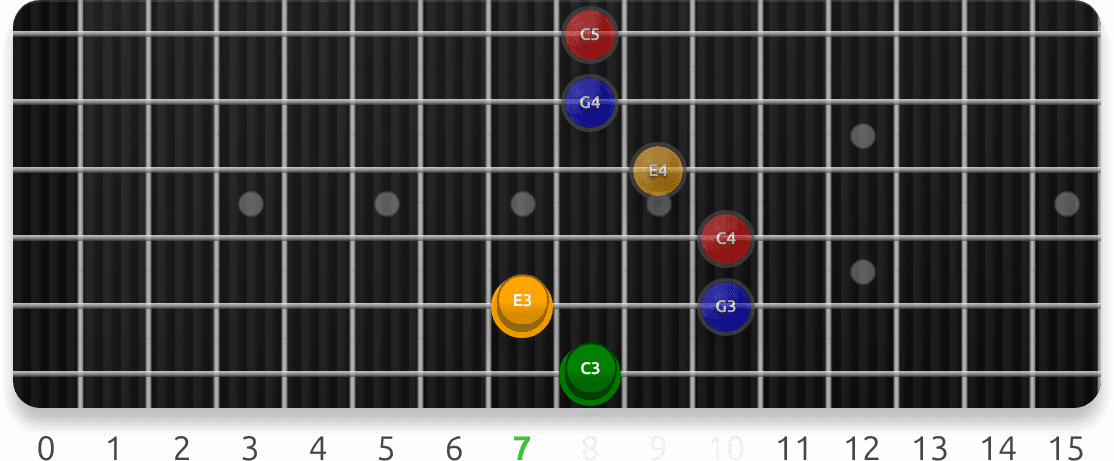
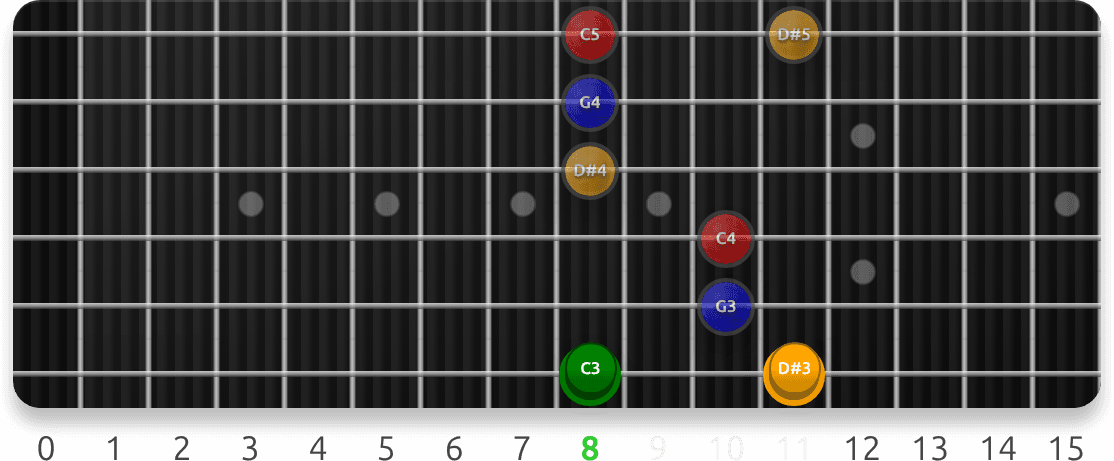
Practice arpeggios as chord-tone maps inside a key, then connect them to the scale around them. ScaleMode.Pro supports chord focus (triads or sevenths) so you can drill chord tones in position and then expand back to full-scale movement for musical phrasing.
What is roman numeral chord training on guitar?
Roman numerals label chords by scale degree (I, ii, V, etc.) so you can practice harmony in any key using the same logic. ScaleMode.Pro exercises can use roman-based chord selection when triad or seventh focus is active, which helps you learn “where the ii chord lives” across the neck, not just in one key.
How do jazz guitarists solo over a ii–V–I?
A practical starting point is voice-leading guide tones (3rds and 7ths) across the chords, then filling in with scale motion. ScaleMode.Pro has structured courses and drills that build diatonic chord-tone awareness across positions, which is the skill that makes ii–V–I lines sound intentional.
What scale should I use over a dominant 7 chord?
Mixolydian is the common “inside” sound for a dominant 7. From there you can add chromatic passing motion (bebop-style) or use symmetric colors (whole-tone or diminished) for more tension. In ScaleMode.Pro you can switch scale families and keep the same key and position so you can compare the sounds without changing everything at once.
What is a bebop scale and why do jazz players use it?
A bebop scale is an 8-note version of a 7-note scale with one extra chromatic passing tone. The goal is rhythmic: when you play steady eighth notes, chord tones line up on strong beats more often. ScaleMode.Pro helps by combining the interval map with drills so the “why” becomes a feel, not trivia.
How do I write a heavy metal guitar solo that sounds musical?
Start with a short motif, develop it, then choose one main scale color (natural minor, Phrygian, harmonic minor, or a harmonic-minor mode like Phrygian dominant). Next, decide your targets per chord and use technique as punctuation. In ScaleMode.Pro you can lock in a scale family, mode, and position and train clean note choices with live feedback.
What is harmonic minor used for in rock and metal?
Harmonic minor adds a raised 7th that creates a stronger pull back to the root, so it sounds dramatic and directional. Metal players also use its modes for “exotic” dominant colors. ScaleMode.Pro lets you practice harmonic-minor modes by position so the sound becomes playable across the neck.
What is melodic minor used for in jazz guitar?
In modern jazz teaching, melodic minor is a minor sound with a natural 6 and natural 7. It is used for modern minor color and as a source for common dominant tension sounds. ScaleMode.Pro includes melodic-minor mode practice so you can map the degrees and train them in multiple positions instead of one isolated shape.
When should I use the whole-tone or diminished scale?
Whole-tone and diminished are symmetric scales used as tension colors, most often around dominant-function moments. They work best when you resolve to clear chord tones so the listener hears the tension as intentional. ScaleMode.Pro helps by keeping chord-tone targets visible while you practice these colors.
How do I practice scales so they sound like real music?
Practice in phrases, not just straight runs. Write 2-bar ideas with a start note, a peak, and a landing note, then move the same idea through nearby positions. ScaleMode.Pro makes this easier because you can drill patterns with live note checking and keep the fretboard labeled by degrees and chord tones.
Guitar scales and modes, explained
Diatonic scales
The major-scale system that explains keys, chords, and “inside” solos.
Diatonic means “in the key.” The major scale is the reference map for most Western harmony, and natural minor is one of its closest relatives. When you think in scale degrees (1–7), you can predict which notes feel stable and which notes want to move. In ScaleMode.Pro you can map any key as degrees and chord tones, then practice positions so the system becomes usable across the whole neck.
Build fretboard navigation around scale degrees, not random shapes
Understand why common progressions work (and where the chord tones live)
Train positions 1–7 to connect the full neck
Pentatonic scales
Five notes that sound good fast, and still reward deep phrasing.
Pentatonics remove a couple of the harshest half-step moments from major/minor, which is why they are so forgiving. Minor pentatonic is the backbone of blues and rock language. Major pentatonic is the brighter melodic sound behind country and pop lead playing. In ScaleMode.Pro you can practice pentatonic positions and keep degree targets visible so bends and phrasing land on purpose.
Minor pentatonic: vocal bends and bluesy phrasing
Major pentatonic: bright melodic lead language
Positions 1–5 and overlap training for better connection
Modes
Same notes, different center, different mood.
Modes are “flavors” of a parent scale. The mode sound shows up when the harmony supports a tonal center, like a vamp or pedal tone. A fast way to learn modes is to focus on the identity degree that changes the color. In ScaleMode.Pro you can pick a mode, map its degrees, and practice it by position so you learn the sound and the navigation together.
Dorian: minor with a natural 6
Phrygian: minor with a b2
Lydian: major with a #4
Mixolydian: major with a b7
Blues scale
Minor pentatonic plus one tension note that wants to move.
The blues scale is minor pentatonic with an added “blue note.” On guitar, the blues sound comes from how you approach notes: bends, slides, and short call-and-response phrases. ScaleMode.Pro helps by keeping chord-tone targets visible so you can aim your tension and resolve cleanly instead of playing random blues shapes.
Treat the blue note as motion, not a forever note
Aim bends at strong targets (root, 3rd, 5th, b7)
Use rhythm and space to make lines speak
Harmonic minor
Minor-key drama with a stronger pull back to home.
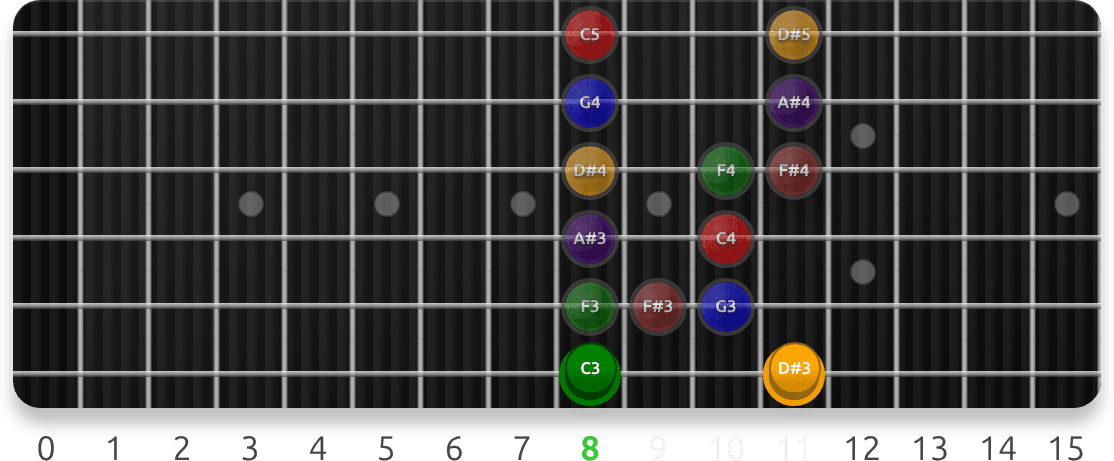
Harmonic minor raises the 7th degree, creating a leading tone that pulls hard to the root. That makes minor-key cadences feel dramatic and directional. In ScaleMode.Pro you can practice harmonic-minor modes by position, so the color is not stuck in one “exotic lick zone.”
Raised 7 creates a stronger resolution pull
Useful for dramatic minor cadences and dominant tension in minor
Train across positions to avoid one-box playing
Melodic minor
Modern minor color and a huge chunk of jazz vocabulary.
In modern jazz education, melodic minor keeps a minor 3rd but uses a natural 6 and natural 7. It is a clean way to get modern minor color and common jazz tensions. ScaleMode.Pro lets you map the degrees and practice melodic-minor modes in multiple positions, which makes the sound controllable rather than theoretical.
Modern minor color: minor 3rd with natural 6 and 7
Great for learning deliberate note choice and tension control
Works best when you target chord tones and resolve cleanly
Symmetric scales
Whole-tone and diminished: tension with repeating patterns.
Symmetric scales repeat the same interval pattern, so they do not behave like normal keys. Whole-tone feels smooth and floating. Diminished feels tight and tense. In ScaleMode.Pro you can practice these colors while keeping chord-tone targets visible, which is the difference between “outside noise” and intentional tension.
Whole-tone: floating dominant tension color
Diminished: structured high-tension color
Resolve to chord tones to make tension sound intentional
Bebop scales
Chromatic passing tones that make swing lines land right.
Bebop scales add one chromatic passing tone to make an 8-note scale. The goal is practical: steady eighth-note lines can place chord tones on strong beats more often. ScaleMode.Pro makes this easier to train because you can keep degree and chord-tone mapping visible while drilling patterns and positions.
Designed for swing eighth-note phrasing
Helps chord tones land on strong beats
Pairs naturally with chord-tone targeting (3rds and 7ths)